Friday, April 24, 2026
spot_img
More
    Home Blog Page 3

    Aina Makes Premier League Team Of The Week

    0

    Nottingham Forest and Nigeria international Ola Aina has been included in the BBC Premier League Team of the Week. The list was compiled by former Warford captain Troy Deeney. Commenting on the performance of Aina, Deeney said:”The Brentford team he faced are well known for getting crosses in from the wide areas. I thought he […]

    The post Aina Makes Premier League Team Of The Week appeared first on Complete Sports.

    Hybrid Cars Top Choice For Consumers In Europe In 2025

    0


    Hybrid-electric vehicles dethroned purely petrol-powered cars as the top power option among consumers in Europe last year, data showed Tuesday.

    Some 1.88 million new vehicles were registered in 2025 in the European Union, an increase of 1.8 per cent from the previous year, according to the European Automobile Manufacturers’ Association (ACEA).

    New car sales “remain well below pre-pandemic levels”, however, the trade association said in a statement.

    Despite the modest overall sales growth, consumers continued to shift towards hybrid and battery-electric vehicles.

    Sales of hybrid-electric vehicles climbed by 13.5 per cent last year to account for 34.5 per cent of total sales in the EU last year, putting them ahead of petrol cars at 26.6 per cent.

    Meanwhile, sales of battery-electric vehicles jumped by 30 per cent to account for 17.4 per cent of overall sales, although the ACEA noted the gain was from a weak performance in 2024 and needs to rise further to stay on track with the EU’s transition goals.

    Sales of plug-in hybrids also rose, but sales of petrol and diesel vehicles dropped.

    The combined market share of petrol and diesel cars fell to 35.5 per cent, down from 45.2 per cent in 2024.

    Volkswagen Group saw sales rise by 5.5 per cent last year to increase its lead as the top-selling carmaker in Europe.

    France’s Renault saw similar growth, but Stellantis — which owns several European brands such as Peugeot and Fiat — saw sales slide by 4.7 per cent.


    READ ALSO: Trump To Hike Tariffs On South Korean Goods To 25%

    Chinese carmaker BYD tripled its sales in the EU last year, although from a small base.

    China’s SAIC Motor, which owns the MG brand, saw sales rise by a third.

    Sales of Teslas fell by nearly 38 per cent last year as the electric car brand has suffered reputational damage in Europe from its association with billionaire Elon Musk, who backed US President Donald Trump before a falling-out, and who has endorsed Germany’s far-right AfD party.


    AFP

    The post Hybrid Cars Top Choice For Consumers In Europe In 2025 appeared first on Channels Television.

    Trump To Hike Tariffs On South Korean Goods To 25%

    0


    South Korea’s government on Tuesday held emergency talks after US President Donald Trump said he would raise tariffs on South Korean goods, including autos, lumber, and pharmaceuticals.

    Trump said Monday that he would raise tariffs on the goods, accusing South Korea of not living up to an earlier trade pact struck with Washington.

    South Korea’s presidential office said it had not been officially informed about the tariff hike plans in advance.

    The increase would bring tariff levels from 15 per cent to 25 per cent.

    “South Korea’s Legislature is not living up to its Deal with the United States,” Trump wrote on his Truth Social platform.

    He added that he was increasing tariff rates “because the Korean Legislature hasn’t enacted our Historic Trade Agreement, which is their prerogative.”

    On Tuesday, Seoul convened an emergency meeting to hash out a response, with Trade and Industry Minister Kim Jung-kwan, currently in Canada, joining remotely.

    “Our government intends to convey its commitment to implementing the tariff agreement to the US side, while responding in a calm and measured manner,” Seoul said in a statement.

    The country added it believed Washington’s “tariff hikes only take effect after administrative steps such as publication in the Federal Register”.

    South Korea has said Trade Minister Kim will travel to Washington for talks on the issue with US Commerce Secretary Howard Lutnick.

    Trump’s apparent about-face comes months after Washington and Seoul struck a trade and security deal, capping a period of tense negotiations.

    The agreement was finalized after Trump met his South Korean counterpart Lee Jae Myung in October, and included investment promises by South Korea alongside tariff cuts by the United States.

    Since then, it has remained in something of a legal limbo in South Korea.

    Seoul’s presidential office insisted in November that the deal does not require parliamentary approval, arguing it represents a memorandum of understanding rather than a binding legal document.

    Asked whether the tariff deal had been submitted to parliament for approval, a senior official told AFP on Tuesday they were looking into it but did not elaborate.

    Under the pact, Washington would maintain levies of up to 15 per cent on South Korean goods, including vehicles, car parts, and pharmaceuticals.

    Crucially, the deal’s terms brought US tariffs on South Korean cars down from a 25 per cent level.

    Trump’s latest threat, if enacted, would reverse that.


    READ ALSO: Customs 2025 Revenue Hits ₦7.28trn, Exceeds Projection

    Export Pain

    The auto industry accounts for 27 per cent of South Korea’s exports to the United States, which takes in nearly half of the country’s car exports.

    A reversal to a higher tariff level could also put South Korean exports in a less advantageous position compared with economies like Japan and the European Union, which have both struck deals for a 15 per cent US tariff.

    The Trump administration has yet to issue formal notices to enact the changes.

    The US president’s threat targeting South Korea is his latest against key trading partners in recent days.

    Over the weekend, Trump warned Canada that if it concludes a trade deal with China, he would impose a 100 per cent tariff on all goods coming across the border.

    Earlier in January, Trump also threatened to slap tariffs on multiple European nations until his purchase of Greenland is achieved. He has since backed off the threat.


    AFP

    The post Trump To Hike Tariffs On South Korean Goods To 25% appeared first on Channels Television.

    How to use AI image tools to explain ideas visually

    0

    Creative prompt-writing techniques to turn AI image tools into fun, powerful systems.

    ‘I can’t actually keep working on a long, manual task like this in the background once a message turn ends’ — ChatGPT has a major limitation that needs to be addressed, and fast

    0

    ChatGPT can appear to handle long, complex jobs, but a hidden limitation means it can’t actually work on tasks once a reply window closes.

    Residents protest three-month blackout in Lagos

    0

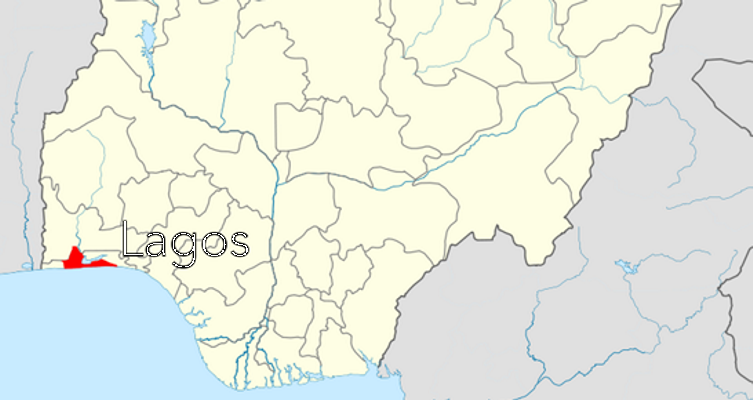
    Residents of Gowon Estate in the Egbeda area of Lagos State on Monday staged a protest at the Ikeja Electricity Distribution Company’s office over a prolonged power outage that has plunged parts of the area into darkness for months.

    The protesters converged on the IKEDC office in the Ponle area of the community, demanding the immediate restoration of electricity to their homes.

    According to them, several streets along 34 Road, including B Close, C Close, D Close, and F Close, had been without power supply since October 12, 2025, following the breakdown of a 500KVA transformer serving the area.

    The protesters also accused the electricity distribution company of neglecting repeated complaints and letters written to its officials.

    Speaking to PUNCH Metro at the scene, one of the protesters, Oluwatoyin Adebayo, lamented the hardship the blackout had caused families in the area.

    She said, “Because there is no light, we cannot buy things to keep in our freezers again. Things are getting spoiled.

    “We don’t even have money to buy things because our husbands say we are just wasting money on fuel every time. We are near the IKEDC office; they are our neighbours, yet they are punishing us.”

    Another resident, Reverend Tom Omorogbe, said he was spending as much as N30,000 every day on fuel to power generators, despite having already loaded his prepaid meters with electricity units, which he claimed he could not use.

    “We are Nigerians, not foreigners. We pay our bills. Our money is trapped in the meter, and they are using our money to run their business while we are buying fuel again,” he added.

    The protesters also expressed concern over the impact of the outage on their children and the elderly.

    “School has resumed. We want to store food to take care of our children, but we cannot because the food will spoil. Three people have died because of the heat.

    “If they don’t do something, we are not here to joke. We need our light now. If not, this week or next week, we will lock this place. Nobody will come in, nobody will go out,” another protester, who identified herself simply as Ingobu, disclosed while also chanting “enough is enough.”

    PUNCH Metro observed that the protesters threatened to shut down the IKEDC office if no concrete action was taken.

    Related News

    Our correspondent learnt that in a letter earlier sent to the distribution company, the community explained that the transformer went off on October 12, 2025, and that IKEDC engineers visited on October 15, 2025, saying the equipment was faulty and needed to be taken to a workshop.

    However, the letter stated that despite repeated visits and calls to the company’s undertaking, no further action was taken, leaving the entire community in darkness for weeks.

    “In effect, the entire community has been in total darkness since 12th October, 2025, while the faulty transformer remains untouched. All we get are unfulfilled daily promises that they were coming to remove it.

    “We are passionately appealing to your organisation to please take urgent action on this matter. The entire community of hundreds of consumers, especially the children and aged ones, is in distress because of the situation,” the letter partly read.

    In another petition addressed to the state government and seen by PUNCH Metro on Monday, the residents stated that the same transformer, which had been overhauled, broke down again on December 13, 2025, after earlier outages between October 12 and November 6, 2025.

    The petition, which was signed by a resident, Dipo Oduko of B Close, added that the transformer was over 40 years old and appeared to have major technical issues with a need for replacement.

    “We are therefore appealing to you, sir, to kindly rescue us from this suffering. Many of us are retirees that had served this nation in our various callings meritoriously and deserve a quality and decent living in our old age,” the petition added.

    A top official in the company, while addressing the protesters, apologised for the inconveniences while assuring them that their light would be restored soon.

    “The management was not aware of your communication to us; if we had received it, your demands would not have taken a longer time. For us at Ikeja Electric, we are a reputable organisation. It is just unfortunate that this is happening.

    “Immediately after this, we will send our engineers there to see the possibility of providing a solution to the problem. The first option is to see how we can put you on an adjoining transformer, and if that does not work, we will give you a very reasonable time limit to see how we can get you another transformer,” the official disclosed.

    The lack of power supply spanning months has been a recurring issue in some parts of the states, as residents are often forced to protest at the offices of the electricity distribution company to express their grievances.

    PUNCH Metro reported in July 2025 that some residents, mainly retirees, in the Unity Estate, Badore area of Ajah, Lagos State, expressed displeasure over the prolonged blackout caused by a faulty power transformer, which they say has left the community in darkness for two months.

    MTN suffered 9,218 fibre cuts in 2025 — CEO

    0

    Nigeria’s largest telecom operator, MTN, said its network suffered 9,218 fibre cuts in 2025, highlighting persistent weaknesses in the country’s telecom infrastructure. Theft and vandalism affected 211 sites by the end of November, further straining service reliability.

    In a LinkedIn post titled “MTN Nigeria 2025 Wrapped”, CEO Karl Olutokun Toriola noted that each disruption interrupted services relied upon daily by millions of Nigerians, underscoring the challenges of maintaining a resilient digital network.

    “Over 85 million subscribers chose us by the end of September 2025,” Dr Toriola said. “With growth comes greater responsibility. The fibre cuts, theft, and vandalism directly disrupted services, and we take responsibility for these realities.”

    MTN also reported receiving 1,624,263 customer complaints across calls, emails, social media, and walk-in centres throughout the year. Dr Toriola said that the company treats every message as a signal, helping identify where service expectations were met and where gaps remain.

    The data aligns with reports from the Nigerian Communications Commission Uptime portal, which indicated that Nigerian telecom operators recorded 118 network outage incidents in December 2025, with MTN accounting for the largest share at 64 disruptions. The outages were attributed to multiple factors, including fibre cuts, power outages, bushfires, and vandalism of telecommunications infrastructure.

    Related News

    While acknowledging the challenges, MTN’s CEO stressed that the company is committed to improving service. “We are not where we want to be yet, but our commitment to putting the customer at the centre of everything we do remains constant. We see you. We hear you. We exist because of you. And we will keep getting better,” he said.

    Despite government efforts, Nigerian telecom operators continue to face frequent service disruptions caused by vandalism and fibre cuts. While legal measures and collaborative initiatives have been introduced, the persistence of high incident rates and enforcement gaps has kept the problem unresolved.

    In August 2024, President Bola Tinubu issued an order designating telecom infrastructure as critical national information infrastructure, making deliberate damage a criminal offence. Following this, the NCC launched a public reporting platform for vandalism incidents in May 2025 and set up an interministerial committee in February 2025 to address fibre cuts caused by roadworks.

    However, vandalism continues largely due to weak enforcement, with few arrests or prosecutions reported, even as incidents surged after May 2025. Contributing factors include theft for black market resale, accidental damage during construction, bush burning, and restricted site access. These challenges have resulted in revenue losses for telecom companies and a decline in service quality for subscribers.

    As MTN Nigeria marks its 25th anniversary in 2026, the company says its focus

    Fleeing bus driver kills PoS operator in Abuja

    0

    A female Point of Sale operator was killed on Monday after being hit by a commercial bus near the Total filling station in the Berger area of the Federal Capital Territory.

    Eyewitnesses said the bus driver, operating a coastal bus, was being chased by officials of the Federal Road Safety Corps (FRSC) when the incident occurred.

    A commuter who witnessed the incident, identifying himself as Johnson, told our correspondent that the woman had arrived early for work and was crossing the road after buying food. He added that after the bus struck her, neither the coastal bus driver nor the FRSC officials stopped at the scene.

    “The woman who was killed is a POS operator in the area. She came very early, went to buy food, and was trying to cross near the Total filling station when officials of the Federal Road Safety Corps were chasing a commercial coaster bus at high speed. In the process, the coaster bus hit the woman and threw her to the other side of the road.

    “The driver did not stop. The FRSC vehicle also did not stop. They continued chasing the coaster bus at high speed. The body lay on the road for several minutes with serious injuries. The woman had died by the time police officers from Utako Division arrived. Someone recorded the entire incident and showed it to the police. I saw him leave with them,” Johnson said.

    A newspaper vendor in the area confirmed that the incident occurred in the morning near the Total filling station, adding that both the bus and the FRSC vehicle continued driving after the collision.

    “The incident happened this morning around the NNPC area, opposite the Total filling station. The FRSC vehicle and the coaster bus were moving at high speed. The coaster bus hit the woman and continued. None of the vehicles stopped. They did not wait,” he said.

    Two mechanics working opposite the filling station also confirmed that the bus was being chased by FRSC officials when it hit the woman. “Road safety officials were pursuing a coaster bus that plies the Mararaba–Nyanya axis this morning. It was the chase that caused the driver to hit the woman. After the collision, neither vehicle stopped,” they said.

    Related News

    Another POS operator in the area, Ola, said FRSC officials frequently chase vehicles in the area. He recalled a similar incident on Saturday that did not result in casualties due to low pedestrian presence.

    “This is where the incident happened. FRSC officials often carry out such chases here. On Saturday, they chased a coaster bus, and it could have killed someone if it had been a busy day like Monday. This is not the first time they have chased vehicles in this place. Maybe next time we see them here, we will chase them away,” he said.

    The FCT Sector Commander of the FRSC, Felix Theman, said the Corps is investigating the incident. According to him, all patrol teams operating within the Central Area, Zone 7, and adjoining locations have been recalled to determine whether any FRSC vehicle was involved.

    “I received a report similar to yours, and we are currently investigating the matter. I have recalled all patrol teams, particularly within the central area, Zone 7, and surrounding areas, to determine whether any of our patrol units were actually involved. Once our investigation establishes the facts, we will issue a press statement to that effect.

    “At the moment, we are looking into the matter to verify its accuracy. However, we also know that there are many instances where, even when I use a staff car, if someone commits an offence or runs a red light, they often assume that anyone in a vehicle is trying to apprehend them.

    “Sometimes they even block the car, even when no patrol is being conducted. Most of the time, people don’t differentiate between a patrol vehicle and other vehicles. Many pickups, for example, are used for activities other than regular patrol.

    “Until we can confirm whether it was indeed a patrol team, it would be premature to claim that a patrol unit was pursuing someone. I also understand that this particular area is always very busy,” Theman said.

    Efforts to obtain a reaction from the FCT Police Public Relations Officer, Josephine Adeh, were unsuccessful at the time of filing this report. She neither answered her calls nor responded to a WhatsApp message sent to her.

    Fire guts residential building, shops in Anambra

    0

    An early-morning fire on Monday gutted a residential building, destroying no fewer than 28 apartments, including several shops, at No. 32 Orumba Street, Okpoko, in the Ogbaru Local Government Area of Anambra State.

    It was gathered that the fire, which started in one of the apartments at about 2 am, quickly spread to adjoining apartments before engulfing the shops.

    The blaze, which reportedly caused damage running into several millions of naira, was brought under control with the intervention of police officers from the Okpoko Police Division, who provided security while residents made frantic efforts to quench the fire.

    No casualties were recorded, but the incident caused panic as residents struggled to salvage their belongings from the raging flames.

    Although the cause of the fire remains unconfirmed, preliminary reports suggested that it may have been triggered by a power surge following the restoration of electricity supply.

    Speaking to journalists at the scene, the landlord of the building, Kingsley Oguejiofor, said the fire started shortly after power was restored at about 2 am.

    Oguejiofor said, “I was awakened by shouts from tenants, only to discover that the building was already in flames.

    “They made frantic efforts to put out the fire but could not salvage anything, as it spread rapidly and reduced the building to ashes.”

    Related News

    Some affected shop owners said they received distress calls informing them that their shops were on fire, but by the time they arrived at the scene, the entire building had been razed.

    One of the victims, who identified himself simply as Uzor, said, “We received distress calls informing us about the fire, but before we could get to the scene, the entire building was already engulfed, thereby making it impossible for anyone to salvage anything from the shops.

    “It is highly regrettable because goods and property worth several millions of naira were destroyed. It is more worrisome because we had only recently restocked, and now we are left confused about how to start again at the beginning of the year.”

    At the scene, men of the Nigeria Police Force, led by the Divisional Police Officer of Okpoko Division, CSP Ewelu Owai, alongside community stakeholders, were present to maintain law and order and assess the level of damage.

    In November 2025, PUNCH Online reported that an early-morning fire destroyed several shops in a three-storey commercial building at Nodu Market, behind Juhel Pharmaceutical Company, in Awka South Local Government Area of Anambra State.

    That blaze, which also caused damage worth several millions of naira, was brought under control by the Anambra State Fire Service. No casualties were recorded. Although the cause of the fire was unconfirmed, preliminary reports suggested it started after an occupant fell asleep while cooking.

    Eyewitnesses said the fire raged for several minutes before firefighters arrived and prevented it from spreading to nearby structures.

    Sit-at-home: AAC faults Soludo over Onitsha market closure

    0

    The Anambra State Chapter of the African Action Congress has condemned the closure of the Onitsha market by the state governor, Prof. Chukwuma Soludo.

    In a statement on Monday, the state Publicity Secretary, AAC, Chinedu Anthony, said the governor’s decision was announced without adequate consideration for the welfare of traders and residents.

    Anthony said the decision is unacceptable, adding that it is illogical to close businesses, thereby exposing vulnerable citizens to greater risks, when the state should be prioritising security.

    The statement partly read, “This decision, announced without adequate consideration for the welfare of traders and residents, is unacceptable and tone-deaf to the security realities in Anambra State.

    “We question the logic behind closing businesses, thereby exposing vulnerable citizens to greater risks, when the state should be prioritising security.

    “While politicians move around with armed escorts, the common man is left to navigate life’s challenges without adequate protection. Is it fair to punish traders for the state’s security lapses?

    Related News

    “Governor Soludo should focus on addressing insecurity rather than jeopardising livelihoods. Closing markets won’t solve crime; effective policing and community engagement will.”

    The AAC, therefore, urged the state government to reopen the Onitsha market immediately, prioritise security for all citizens, not just politicians and engage stakeholders before taking drastic measures.

    “We stand with traders and residents. Their welfare matters,” the party stated.

    PUNCH Online reports that Soludo ordered the immediate shutdown of the Onitsha Main Market for one week, following defiance by traders and the market leadership to open on Monday, against government directive.

    It was gathered that Soludos’ one-week shutdown order is more than an administrative penalty, but to tackle perceived economic sabotage over the Monday sit-at-home.

    The governor gave the directive after traders refused to open the market on Monday, adding that the development is the latest, and perhaps most drastic, in a protracted war over who controls time and economic life in South-East on Mondays.

    WAFCON 2026: Super Falcons To Prepare With WAFU Tournament

    0

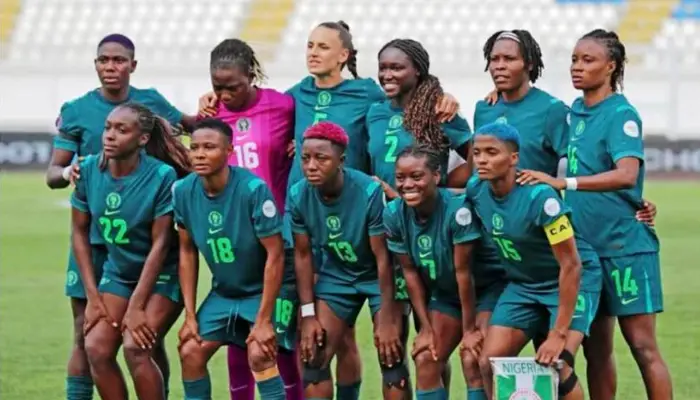
    African champions Super Falcons of Nigeria will participate in the WAFU B Four Nation tournament next month. The invitational tournament will serve as part of the team’s preparation for the 2026 Women’s Africa Cup of Nations. Cote d’Ivoire has been confirmed as hosts of the competition which will run from Friday, 27 February to Saturday, […]

    The post WAFCON 2026: Super Falcons To Prepare With WAFU Tournament appeared first on Complete Sports.

    ‘Dream Come True For Me’ –Ndukwu Reacts After Joining Liverpool

    0

    New Liverpool signing Ifeanyi Ndukwe has expressed delight at joining the Reds in the January transfer window. Recall that Liverpool completed the signing of a talented Austrian center-back on Monday, who will join the Reds in the summer. In an interview with Sky Sport Austria, Ndukwu expressed that joining the Premier League side is a […]

    The post ‘Dream Come True For Me’ –Ndukwu Reacts After Joining Liverpool appeared first on Complete Sports.

    Okra Solar, Infra Credit eye 25,000 rural Nigerians

    0

    Okra Solar and InfraCredit have sealed debt financing deal of a mesh-grid project under InfraCredit’s Climate Finance Blending Facility (CFBF). The deal targets no fewer than 25,000 rural Nigerians not

    The post Okra Solar, Infra Credit eye 25,000 rural Nigerians appeared first on The Nation Newspaper.

    Adeleke to Tinubu: intervene in crisis

    0

    • ’Governor brought trouble on councils’ Osun State Governor Ademola Adeleke yesterday begged President Bola Ahmed Tinubu to intervene in the ongoing control crisis in local government councils and continued

    The post Adeleke to Tinubu: intervene in crisis appeared first on The Nation Newspaper.

    Igboho: my name has been removed from Wanted Persons’ list

    0

    Chief Sunday Adeyemo, popularly called Sunday Igboho, yesterday arrived in Nigeria after his name was removed from the list of wanted persons. He returned home from self-exile in neighbouring Cotonou,

    The post Igboho: my name has been removed from Wanted Persons’ list appeared first on The Nation Newspaper.

    APC: no plan to replace Shettima as Tinubu’s running mate in 2027

    0

    The ruling All Progressives Congress (APC) has said there is no truth is the rumour about the possibility of replacing Vice President Kashim Shettima as the running mate to President

    The post APC: no plan to replace Shettima as Tinubu’s running mate in 2027 appeared first on The Nation Newspaper.

    Legal, technical hitches stall Diezani’s corruption trial in UK

    0

    The corruption trial of a former Petroleum Minister, Diezani Alison-Madueke, in London was delayed yesterday for legal and technical reasons. The 65-year-old, who is the first female president of the

    The post Legal, technical hitches stall Diezani’s corruption trial in UK appeared first on The Nation Newspaper.

    Akwa Ibom APC expands frontier as SAN joins party

    0

    Eno, Akpabio: Enoidem’s entry signifies peace, unity, growth Following the call by Akwa Ibom State Governor, Umo Eno, to advance his administration’s ARISE Agenda and President Bola Tinubu’s Renewed Hope

    The post Akwa Ibom APC expands frontier as SAN joins party appeared first on The Nation Newspaper.

    Abandoned road sparks outrage in community

    0

    Residents of Alaja/Olayemi Road in Ayobo-Ipaja in Lagos State have deplored abandonment of their road, which has been under construction for more than two decades, lamenting its impact on their

    The post Abandoned road sparks outrage in community appeared first on The Nation Newspaper.

    Foundation Food Outreach supports vulnerable households

    0

    Margaret Modinat Foundation has given food relief to more than 1,000 households in Ogun and Lagos states. The initiative, led by Founder, Olanrewaju Osibote, was carried out simultaneously in Ijebu

    The post Foundation Food Outreach supports vulnerable households appeared first on The Nation Newspaper.

    Ondo at 50: Activists decry dearth of development

    0

    Civil society group, Ondo Redemption Front, has decried the dearth of development in Ondo State amid its abundant resources. This is as the state prepares to celebrate 50 on February

    The post Ondo at 50: Activists decry dearth of development appeared first on The Nation Newspaper.

    Tinubu gets kudos for nation’s progress

    0

    Tinubu Ambo Support Group has hailed  President Bola Tinubu for his visionary leadership and commitment to development. Speaking at Ojo Federal Constituency Sensitisation Campaign on APC e-Registration, at Babajide Sanwo-Olu

    The post Tinubu gets kudos for nation’s progress appeared first on The Nation Newspaper.

    Alleged forgery: Court AGF takes over Ozekhome’s case from ICPC

    0

    •Ex-AGF Agabi leads 15 SANs for defence The Attorney General of the Federation (AGF) and Minister of Justice, Lateef Fagbemi (SAN), has taken over the prosecution of the criminal case

    The post Alleged forgery: Court AGF takes over Ozekhome’s case from ICPC appeared first on The Nation Newspaper.

    Tinubu arrives Türkiye for state visit

    0

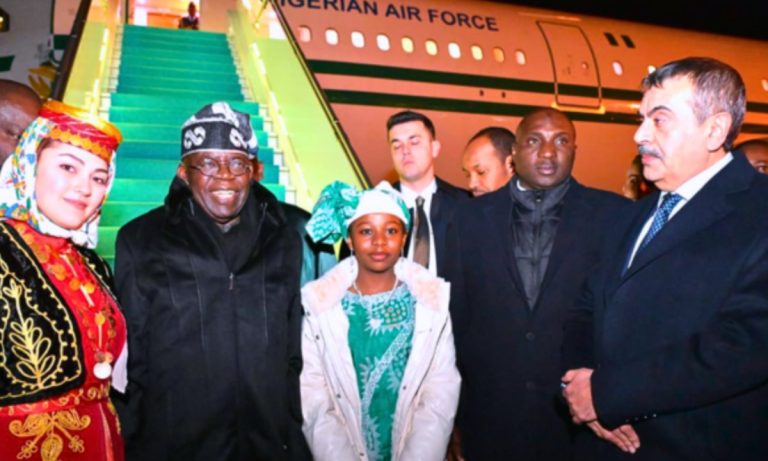
    President Bola Tinubu has arrived in Ankara, the capital of the Republic of Turkiye, on a State visit.

    This was contained in a statement by his Special Adviser on Information and Strategy, Bayo Onanuga, on Monday.

    Onanuga said the president’s plane touched down at precisely 9.03 pm local time.

    According to the statement, the president was received at Ankara Esenboğa Airport by a Turkish government delegation led by the Minister of National Education, Yusuf Tekin.

    The Chargé d’Affaires at the Nigerian Embassy in Türkiye, Ambassador Zayyad Abdulsalam, and other embassy officials were also on hand to welcome him.

    The Attorney General and Minister of Justice, Lateef Fagbemi, SAN,  Minister of Finance and Coordinating Minister of the Economy, Wale Edun, Minister of Solid Minerals, Dele Alake, Minister of Defence, Gen. Christopher Musa(rtd), welcomed the President to his hotel.

    Also at the hotel reception were the Minister of Interior, Olubunmi Tunji-Ojo; Minister of Women Affairs, Imaan Suleiman-Ibrahim; Minister of Innovation, Science and Technology, Kingsley Udeh, SAN; Chairman, House Committee on Defence, Babajimi Benson; Special Adviser to the President on Policy Communication, Daniel Bwala; and Director-General of the National Intelligence Agency, Ambassador Mohammed Mohammed.

    During the visit, he will hold discussions with his Turkish counterpart, Recep Tayyip Erdogan.

    There will also be the signing of Memoranda of Understanding between the two countries, among other engagements.

    Kwara South residents urged to support ongoing military operations

    0

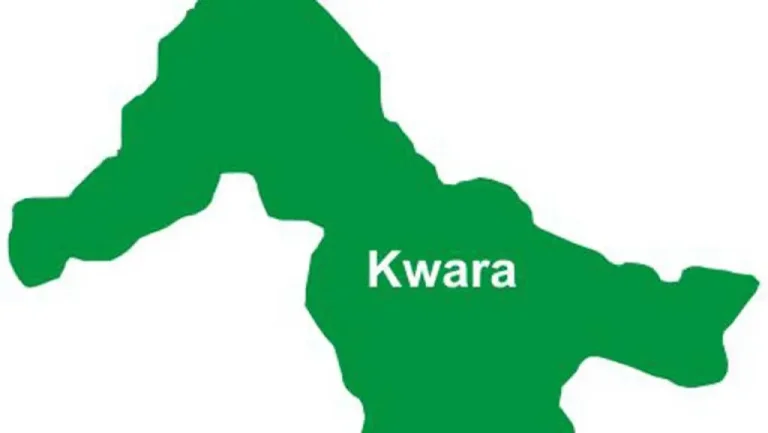
    Residents of Kwara South Senatorial District have been urged to cooperate and support the ongoing military operations against bandits in the district.

    DAILY POST reports that the ongoing military operations in the communities of Ifelodun, Edu, and Patigi Local Government Areas of Kwara State have resulted in the neutralization of several bandits and the destruction of their criminal hideouts, according to an eyewitness account by Abdulganiyu Mutiu.

    Abdulganiyu claimed that, though they are not in the forest to record the military operations, tremendous achievements have been recorded since they commenced.

    In his reaction, the Coordinator of the Joint Security Watch in Kwara South Senatorial District, Zubair Olaitan, urged citizens to believe in, cooperate with, and support the ongoing efforts by the Joint Military/Police Operations to rid the area of bandits and kidnappers.

    In a strongly worded statement issued on Monday, the Coordinator appealed to everyone to have faith in the coordinated efforts of security operatives, including the Forest Guards, in the clearing exercises aimed at sanitizing the forests and allowing profitable activities like farming to continue undisturbed.

    He stated that the lawful operations, which have achieved tremendous progress with ground and air strikes, have dislodged many of the criminals from their established bases, with not less than 100 of them neutralized, and only a few running helter-skelter, possibly seeking help within some communities.

    Olaitan commended the government’s interventions and the military’s efforts in the ongoing operations, warning residents against harbouring any stranger in whatever guise and adding that suspected movements should be promptly reported.

    Police recruitment deadline extended as applications top 400,000

    0

    The Police Service Commission (PSC) and the Nigeria Police Force (NPF) have announced a two-week extension for the ongoing recruitment of 50,000 Police Constables.

    The application portal, which opened on 15th December 2025, will now close on 8th February 2026.

    According to the PSC, in a statement signed by Torty Njoku Kalu, Head of Protocol and Public Affairs, Abuja, over 400,000 applications have already been received.

    However, Kalu stated that a review of submissions revealed significant disparities in state participation.

    While states such as Adamawa, Benue, and Kaduna recorded high numbers of applicants, he said others, like Lagos, Ogun, Bayelsa, Ebonyi, and Anambra, had notably low submissions.

    “The extension is intended to ensure more equitable representation across the country. Eligible Nigerians, particularly from states with fewer applications, are encouraged to apply through the official portal: (link unavailable),” the statement said.

    The Commission also called on state governments, local councils, sociocultural organizations, religious bodies, community leaders, and other stakeholders to mobilize and sensitize eligible citizens within their jurisdictions to take part in the exercise before the new deadline.

    The PSC and NPF then reaffirmed their commitment to a fair and transparent recruitment process.

    Nigerian govt urged to prioritise youth participation in education reform

    0

    The Nigerian government has been advised to move beyond infrastructure, curriculum, and policy reforms and prioritize institutionalizing youth participation in education planning, as well as investing in digital, green, and vocational skills to empower the next generation.

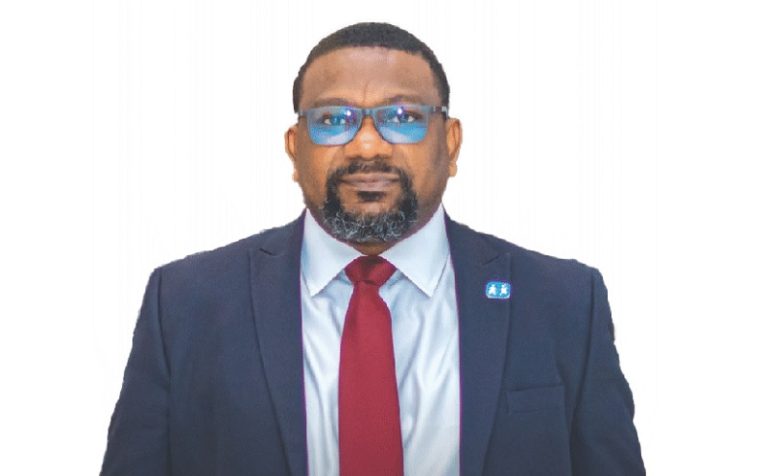
    The National Director of SOS Children’s Villages Nigeria, Eghosa Erhumwunse, gave the advice on Monday in a statement to commemorate the International Day of Education.

    Speaking at this year’s celebration themed “The Power of Youth in Co-Creating Education,” Erhumwunse emphasized the need for youth involvement in shaping education systems, stressing that infrastructure alone does not guarantee meaningful learning, and curriculum reform without relevance does not inspire ownership.

    According to him, despite advancements in increasing access to education, updating the national curriculum, bolstering teacher preparation, and enhancing learning conditions, the number of out-of-school children in the nation is rising.

    Erhumwunse said, “In a country with one of the largest youth populations in the world, education remains both Nigeria’s greatest opportunity and its most urgent challenge. While progress has been recorded in expanding access to schooling, revising the national curriculum, strengthening teacher training, and improving learning environments, the reality remains sobering.

    “Millions of children and young people are still out of school, and many more learn in classrooms that are under-resourced, overcrowded, or disconnected from the realities of their lives and future aspirations.”

    “Over the years, deliberate efforts have been made to improve the physical and learning conditions of schools through the reconstruction and renovation of education infrastructure, the supply of essential learning materials, improved water, sanitation, and hygiene (WASH) facilities, as well as the continuous training and retraining of teachers to strengthen learning outcomes. These interventions remain critical foundations for quality education.

    “However, infrastructure alone does not guarantee meaningful learning, just as curriculum reform without relevance does not inspire ownership. Education becomes stronger, more relevant, and more sustainable when young people are recognized as co-creators rather than passive recipients.”

    He argued that when education systems fail to harness the lived experiences, creativity, and ideas of young people, learning risks becoming distant and disengaging.

    The director added that Nigeria needs more than just legislative and infrastructure changes to fully achieve Sustainable Development Goal 4, opining that a conscious culture change is needed, one that places youth leadership, innovation, and voice at the centre of educational reform.

    “Education systems that listen to youth, learn from them, and build alongside them are better positioned to deliver equity, relevance, and long-term impact,” he added.

    JOHESU strike: Doctors never got salary upgrade – NMA slams NLC, TUC ultimatum

    0

    The Nigerian Medical Association, NMA, has debunked a report by the Nigeria Labour Congress, NLC, and the Trade Union Congress, TUC, claiming that doctors benefited from an upgrade of the Consolidated Medical Salary Structure, CONMESS.

    The National Publicity Secretary of the association, Dr Mannir Bature, disclosed this on Monday in Gusau, Zamfara State capital, while addressing newsmen.

    Bature described the allegation as misleading and capable of fuelling industrial tension in the health sector.

    This statement was in response to the ultimatum issued by the NLC and TUC over the ongoing nationwide industrial action by the Joint Health Sector Unions, JOHESU.

    The NMA stated that there was no upgrade of CONMESS in 2014, as alleged by organised labour.

    It explained that what occurred was a correction of long-standing distortions in the implementation of the salary structure, carried out in line with existing approvals and public service guidelines.

    According to the association, the action merely restored CONMESS to its originally approved position, stressing that correcting an anomaly cannot be equated with an upgrade or preferential treatment.

    “The NMA wishes to unequivocally clarify that there was no upgrade of CONMESS whatsoever, as falsely claimed. What occurred was a correction of a long-standing error and distortion in the application of the CONMESS framework, which had persisted despite clear approvals and established public service guidelines.

    “This corrective action merely restored CONMESS to its rightful and previously approved position. By every objective, technical, and administrative definition, a correction of an anomaly does not amount to an upgrade,” the statement said.

    ‘Garmin actually want their devices to break in these labs’ I went to Garmin’s closely guarded Kansas HQ to find out why its watches are so expensive

    0

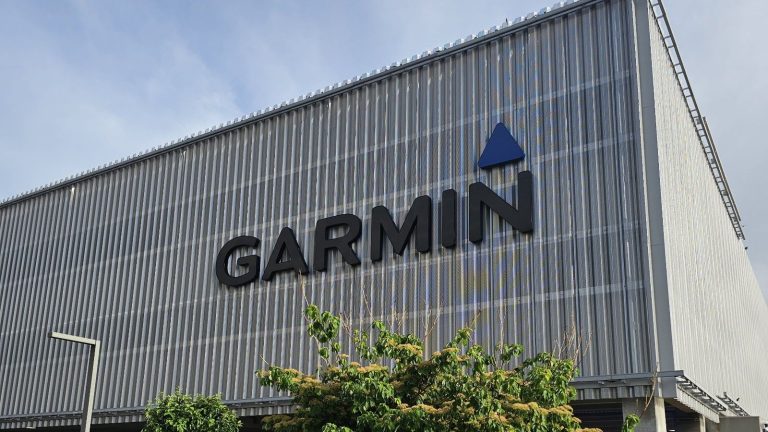
    From brutal stress tests to a robot-run warehouse, here’s what surprised me ‘behind the scenes’ at Garmin’s home in Kansas City.

    My hands-on experience of the Asus Ascent GX10 was a radical one that is only relevant to those actively engaged in AI development

    0

    Designed for the development of AI models, the Asus Ascent GX10 breaks conventional PC design rules to deliver a focused solution.

    Resident Evil 9 Requiem is almost upon us: here are the five games in the franchise I’d recommend playing beforehand

    0

    It’s time to face the past, just like Grace Ashcroft will, and these are the five Resident Evil games I’d suggest playing before Resident Evil 9 Requiem arrives.

    Nigeria’s ₦2 billion capital requirement puts crypto exchanges at a crossroads

    0

    Nigeria’s Securities and Exchange Commission (SEC) has raised the bar for crypto exchanges operating in the country by introducing a minimum capital requirement of ₦2 billion for Digital Asset Exchanges and custodians.

    This is part of the Commission’s revised minimum capital requirement for regulated capital market entities.

    The SEC has steadily tightened its grip on the crypto sector over time. It has rolled out licensing frameworks for virtual asset service providers (VASPs), formally classified certain crypto assets as securities, and licensed two crypto exchanges.

    By forcing exchanges to maintain a sizeable financial buffer, the SEC is reducing the risk of platform failures, protecting users’ funds, and creating a more credible environment for institutional participation.

    However, for an industry where many players are still relatively young and where a significant portion of crypto activity happens outside traditional/local exchanges, the policy raises difficult questions.

    Will smaller local exchanges be able to survive the cost of compliance? Does a flat ₦2 billion threshold reflect the realities of Nigeria’s crypto market, or does it risk concentrating the industry in the hands of a few big players? And what does this mean for innovation in a country that has consistently ranked among the world’s most active crypto markets?

    To answer these questions, this article examines how industry players and experts view the SEC’s new minimum capital requirement and what they believe it means for the crypto exchanges in Nigeria.

    Good intent, poor execution

    From a regulatory standpoint, the SEC’s decision to impose a ₦2 billion minimum capital requirement is not entirely out of place. According to Ayotunde Alabi, CEO of Luno Nigeria, the policy is “directionally defensible” when viewed through the lens of market integrity.

    By forcing exchanges to hold more capital, the regulator reduces the risk of thinly capitalised operators collapsing under stress, particularly during periods of market volatility.

    Victoria Fakiya – Senior Writer

    Techpoint Digest

    Stop struggling to find your tech career path

    Discover in-demand tech skills and build a standout portfolio in this FREE 5-day email course

    Stronger balance sheets also make it easier for exchanges to secure institutional partnerships, including relationships with banks and payment providers that are typically wary of counterparty risk.

    However, Alabi argues that the rule is blunt in its current form, largely because it does not reflect how Nigeria’s crypto market actually works.

    A significant share of crypto activity in the country still happens outside centralised exchanges, flowing through peer-to-peer trading, over-the-counter (OTC) desks, and informal stablecoin rails.

    In that context, a high capital threshold risks over-regulating the compliant segment of the market while leaving the much larger informal perimeter relatively untouched.

    The result, he suggests, is a mismatch between regulatory burden and actual risk. Exchanges that already operate within the rules face higher costs, while unregulated channels—where consumer risk is often higher—remain largely unaffected.

    A more practical approach, Alabi says, would be proportional regulation.

    “The more practical approach is usually proportionality: capital tiers linked to risk drivers such as custody exposure, volumes, and client asset liabilities, rather than a single high bar for most exchange models.”

    This would allow regulators to target systemic risk more precisely without imposing the same burden on businesses with vastly different models.

    For now, the question remains whether Nigeria’s crypto ecosystem is mature enough to absorb a ₦2 billion capital floor without stifling competition—or whether the policy will accelerate structural changes before the market is ready.

    Another industry insider shares Alabi’s sentiments, saying that while the minimum requirement is important for safety, it will only favour foreign exchanges, which have substantial control of Nigeria’s crypto market. A recent study found that more than 90% of Nigeria’s crypto market is dominated by Binance, Bybit, and WhatsApp P2P, while local exchanges struggle to get market share.

    These exchanges, which already have deep pockets, can easily maintain their control, while the minimum capital requirement could further reduce the presence of local players in the crypto space.

    Do some exchanges need to merge?

    Beyond the ₦2 billion capital requirement, crypto exchanges in Nigeria are also grappling with rising regulatory costs. In 2024, the SEC proposed increasing the registration fee from ₦30 million to ₦150 million.

    Alabi expects the pressure to lead to consolidation. “Some smaller local exchanges will either exit, merge, or pivot to narrower roles,” he says, noting that the combined burden of capital, compliance, and licensing costs may simply become “uneconomic” for many operators.

    This risk is heightened by the SEC’s warning that sanctions will apply to exchanges that fail to meet the new requirements by the compliance deadline.

    “When capital requirements and fixed regulatory costs rise together, exchanges typically respond by increasing spreads or trading fees, tightening risk limits, and reducing marginal customer acquisition and product experimentation,” Alabi explains.

    While these adjustments may help platforms remain financially viable, they could also make crypto services more expensive and less accessible to everyday users.

    There is, however, a potential upside to the shakeout. “The upside is that surviving operators may be materially stronger,” Alabi says, adding that this could “improve consumer confidence and reduce the incidence of undercapitalised ‘flash’ platforms.”

    Still, the concern within the ecosystem is whether the cost of stability will be reduced competition and slower innovation. As regulatory barriers rise, Nigeria’s crypto exchange market may increasingly favour well-capitalised incumbents, leaving little room for smaller or emerging players to grow.

    This affirms the concerns of an industry stakeholder who says proper regulation may have given industry players an upper hand over bigger foreign players.

    She says stricter regulations may force foreign players to partner with local exchanges, creating some balance in the ecosystem.

    The SEC consults more with crypto stakeholders  

    Alabi argues that regulations of this scale should be shaped through deeper and more structured engagement with industry stakeholders.

    “Recapitalisation rules do more than set financial thresholds; they fundamentally alter market structure. “A recapitalisation rule changes market structure, competition, pricing, and consumer outcomes.”

    The SEC has given exchanges a relatively long runway to comply, with a deadline of 30 June 2027, and has indicated that transitional arrangements may be considered on a case-by-case basis.

    “Consultation should be more deliberate and continuous, particularly in a market as complex and fast-moving as crypto. Without that, there is a risk that well-intentioned rules produce unintended consequences.”

    It reduces unintended consequences, such as pushing activity further into opaque channels.

    “Publish an impact assessment, segment stakeholders—exchanges, custodians, brokers, fintech rails, banks, consumer groups—run structured consultations, and then implement with clearly defined transitional paths and supervisory expectations.”

    Such an approach, he argues, would allow regulators to protect consumers and strengthen market integrity without unintentionally undermining innovation or driving crypto activity further underground.

    Boniface steps up recovery at Leverkusen

    0

    Super Eagles striker Victor Boniface has sparked optimism among football fans after posting an update suggesting he has begun his recovery work at Bayer Leverkusen following recent knee surgery, PUNCH Sports Extra reports.

    The 25-year-old forward shared a picture from the Leverkusen gym on Monday, writing simply, “12:49pm. Leverkusen.”

    The post came a day after Boniface hinted at a return to training on his X (formerly Twitter) account on Sunday with a hopeful message alongside a photo of himself on the pitch.

    “Work starts tomorrow. Thank you, LORD,” Boniface wrote.

    Related News

    The Nigeria international, who is still on a loan contract at Werder Bremen from Bayer Leverkusen, has been sidelined in recent weeks after undergoing knee surgery.

    The posts generated positive reactions from fans and supporters, many of whom have been eagerly awaiting updates on his fitness ahead of upcoming club and international engagements.

    Although no official timeline has been given for his full return to competitive action, the messages appear to indicate that Boniface has resumed light training as part of his rehabilitation.

    His Super Eagles teammates sent heartfelt messages of support to the forward following reports of his surgery during the 2025 Africa Cup of Nations when they claimed a bronze medal.

    All rights reserved. This material, and other digital content on this website, may not be reproduced, published, broadcast, rewritten or redistributed in whole or in part without prior express written permission from PUNCH.

    Contact: [email protected]

    Enekwechi wins Orlen Cup in season opener

    0

    Nigeria’s Chukwuebuka Enekwechi began his 2026 season with victory at the Orlen Cup in Łódź, producing a dominant 20.82m throw to win the men’s shot put at the World Athletics Indoor Tour Silver meeting in Poland, PUNCH Sports Extra reports.

    The Africa record holder finished ahead of Romania’s Andrei Toader, who placed second with 20.55m, while Serbia’s Armin Sinančević took third on 19.93m.

    Poland’s Szymon Mazur, the best-placed home athlete, finished fourth with 19.69m, with Italy’s Nick Ponzio completing the top five on 19.58m.

    The rest of the field was headed by Piotr Goździewicz (18.02m), Jakub Korejba (17.55m), Wojciech Marok (17.48m), Damian Rodziak (17.23m) and Ukraine’s Maksym Lebediuk (15.75m).

    Enekwechi’s winning mark gave him a clear margin over the field and underlined his status as one of world’s leading throwers, as he laid down an early marker for the new campaign in his traditional season-opening competition.

    The result also marked an improvement shift in his Orlen Cup history. This was his third consecutive appearance at the meeting and his third straight season opener with the event, having previously finished second in 2024 with 21.14m and again in 2025 with 20.88m.

    Related News

    On this occasion, he converted consistency into victory, finally standing on the top step of the podium in Łódź.

    Enekwechi is the reigning two-time African champion in the shot put, a silver medallist at the 2018 Commonwealth Games and a two-time African Games champion, having won titles in 2019 and 2023.

    His performance in Poland continues a career trajectory that has established him as Nigeria’s leading figure in the event and one of the continent’s most reliable performers on the global circuit.

    The women’s competition at the meeting was won by Poland’s Zuzanna Maślana.

    With the 2026 season now under way, Enekwechi’s opening victory at the Orlen Cup sets an early tone for the year ahead, as he builds momentum towards major continental and international championships.

    The next edition of the Orlen Cup is scheduled to take place in Łódź in February 2027.

    Nigeria face Egypt in must-win handball clash

    0

    Nigeria’s Green Arrows will face defending champions Egypt in a decisive Group I encounter on Tuesday (today) at the African Men’s Handball Championship, with qualification for the semi-finals and a direct ticket to the 2027 IHF Men’s World Championship at stake, PUNCH Sports Extra reports.

    Egypt go into the final round of group matches as leaders after winning both of their games, scoring 83 goals and conceding 56 to sit top with four points and a commanding goal difference of plus 27.

    Nigeria are second on two points following one win and one defeat, with a goal difference of minus one, level on points with Angola but ahead on goals scored.

    Widely regarded as Africa’s most successful handball nation, Egypt have a storied pedigree at global level, having become the first non-European country to reach the semi-finals of the World Championships and the first African side to reach the last four at the Olympic Games.

    Their dominance in the group has underlined their status as favourites to progress.

    Nigeria enter the match seeking a response after suffering their first defeat of the championship against Angola.

    That 27–24 loss ended an impressive run which had seen the Green Arrows top their preliminary group with wins over Algeria, Zambia and hosts Rwanda, raising hopes of a first semi-final appearance since 1998.

    Related News

    Despite the setback, Nigeria remain in contention, and victory over Egypt would represent a historic result, keeping alive their ambitions of returning to the global stage for the first time since the 1999 IHF Men’s World Championship.

    Nigeria’s fate, however, may be partly determined before a ball is thrown in their match, with Angola and Algeria meeting earlier in the day.

    Algeria are bottom of the group with no points and a goal difference of minus 16, while Angola sit third after a narrow win over Nigeria and a defeat to Egypt.

    If Algeria were to defeat Angola, Nigeria would secure progression automatically before facing Egypt, as Algeria would be unable to overturn Nigeria’s superior goal difference unless they won by an exceptional margin.

    A victory for Angola, however, would move them above Nigeria on points, leaving the Green Arrows needing a win against Egypt to finish in the top two.

    Failure to end the group in the top two would see Nigeria drop into the fifth to eigth place classification matches, with only the winner of that phase progressing to the World Championship in Germany next year.

    Five of us created Kwankwasiyya, not Kwankwaso – Kano ex-dep gov

    0

    A former Deputy Governor of Kano State, Prof. Hafiz Abubakar, has opened up on the historical creation of the Kwankwasiyya Movement, revealing that he and five other supporters of the former Kano State governor, Alhaji Rabiu Kwankwaso coined the Kwankwasiyya acronym.

    Prof Abubakar declared,  “Myself and five others created the Kwankwasiyya Movement and even gave it a red cap symbol, not Dr. Rabi’u Musa Kwankwaso.”

    He added, “Dr Yunusa Adamu Dangwani, Rabiu Suleiman Bichi, myself, and others constructed the acronym of Kwankwasiyya when the going was tough and we were somewhat sidelined.

    “At that time, we gave every support to Rabiu Kwankwaso to survive the political tsunami directed at him by the political bigwigs in Kano, and that was how we created the movement.”

    Prof. Abubakar criticised Kwankwaso for failing to appreciate those who supported him, believing that he knew it all.

    “That bad behaviour drove all those loyal to him away, leaving him alone. We thought Kwankwaso would act like the late Mallam Aminu Kano, who always acknowledged that others created NEPU, PRP, and the Sawaba movements, giving them credit at every opportunity, but alas, that was not the case with Kwankwaso,” he noted.

    Related News

    Earlier, Kano State Governor Abba Kabir Yusuf has said that he believes in Allah as the ultimate source of power and guidance.

    Governor Yusuf, who was speaking for the first time since he resigned his membership from the NNPP, made the remarks while presenting motorcycles to his social media handlers on Saturday.

    “In 2023, it was God who gave me power, not anybody else, and I still thank and appreciate Him as the only one who will allow me to continue in 2027,” Yusuf said.

    He added, “Even all the talk about 2027 is a misplaced priority, because who knows whether he will make it to tomorrow, let alone 2027.”

    The Kano governor emphasised that his major concern at the moment is Kano, stressing, “We have to get it right to have our full peace and security before talking about anything, and that is my major concern now, not anything else.

    “Let me remind everybody that, to me, Kano comes first, not loyalty to anybody. Everyone should know that no one is bigger than Kano. We shall all be loyal to Kano.”

    Nathaniel Idowu U-14 Football League enlivens Ajegunle

    0

    The heartbeat of Ajegunle pulsed with excitement as the Nathaniel Idowu Foundation U-14 Football League made its debut at the Nathaniel Idowu Pitch, Oregie, Ajegunle-Apapa, Lagos, last weekend.

    The opening weekend delivered drama and delight, with 21 goals scored across six matches.

    Fortune FC stole the spotlight with a commanding 5–0 victory over Divinely Blessed FC, while Strong Dove FC matched the fireworks with a 5–1 win against Best of Best FC.

    Elsewhere, Michael May FC and Ajegunle United battled to a 1–1 draw, Pure Talents FC defeated Coal City FC 2–0, Bright Future FC edged Moree Wins FC 2–1, and Sharp Talent FC recorded a 2–0 win over Young 11 FC.

    The league, organised by the Ajeromi-Ifelodun Sports Council with support from the Nathaniel Idowu Foundation, will run for 11 weeks and feature 12 teams from across Lagos State. The top four teams will advance to a Super 4 playoff, where the eventual champions will be crowned.

    Speaking at the launch, the Director-General of the Ajeromi-Ifelodun Sports Council, McAnthony Anaelechukwu, highlighted Ajegunle’s rich sporting heritage.
    Related News

    “Ajegunle is the home of sports and entertainment, particularly football. We are poised to reclaim our place of pride as the true home of football through youth-driven grassroots initiatives like this,” he said.

    Anaelechukwu also commended the Nathaniel Idowu Foundation for its commitment to facility development and youth empowerment, urging other stakeholders to emulate the initiative.

    Prizes will be awarded based on final standings, with the champions set to receive N500,000, runners-up N300,000, third place N200,000, fourth place N75,000, and N50,000 each for the teams finishing fifth and sixth.

    In addition to the boys’ competition, the organisers also announced a girls’ development programme. A 10-week initiative tagged “Let Her Play” will run from February 7 to April 11 at the New Maracana Stadium, providing secondary school girls with opportunities to train, compete and pursue football careers.

    Leprosy patients groan as drug shortage persists for two years — Dermatologists

    0

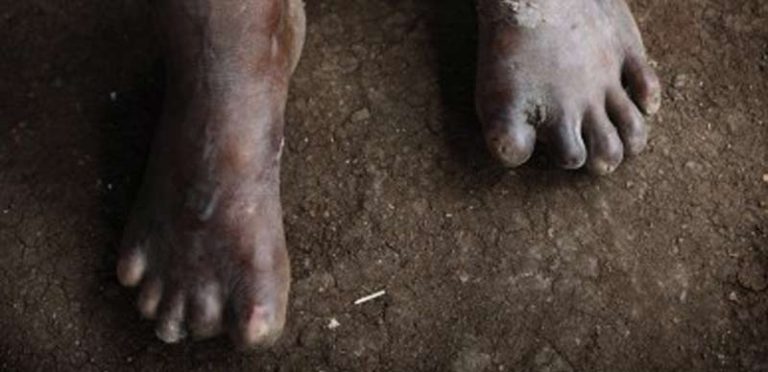
    The Nigerian Association of Dermatologists has raised the alarm over a critical two-year shortage of multidrug therapy for leprosy patients across the country, warning that the absence of treatment is making a cure impossible for affected individuals.

    The association disclosed that regulatory and administrative delays have prevented the clearance and distribution of essential medications, despite their procurement and donation through official World Health Organisation-approved channels.

    It noted that the prolonged unavailability of the life-saving drugs has left patients in multiple states without access to treatment, leading to progressive nerve damage, disability, deformities, and continued community transmission.

    According to the WHO, leprosy, also known as Hansen disease, is a chronic bacterial infectious disease that affects the skin, peripheral nerves, the upper respiratory tract, and the eyes, leading to physical deformity.

    The global health agency notes that it is a neglected tropical disease that still occurs in more than 120 countries, with around 200,000 new cases reported every year.

    PUNCH Healthwise earlier reported that although Nigeria met the World Health Organisation’s elimination target of one case per 10,000 population in 2000, leprosy remains a public health concern in the country, with more than 3,500 new cases recorded annually and many patients living with disability, stigma and discrimination.

    Findings reveal that the country ran out of stock of the multi-drug therapy in early 2024 due to a bureaucratic delay in supplies and new domestic testing regulations.

    But in early 2025, the WHO announced the shipment of the drugs to Nigeria after a yearlong holdup.

    But in a statement sent to PUNCH Healthwise on Sunday to commemorate World Leprosy Day 2026, signed by the NAD President, Prof Dasetima Altraide, and the Secretary General, Dr Hauwa’u Makarfi, the association expressed deep concern over the situation.

    The statement read, “As Nigeria joins the global community in commemorating World Leprosy Day 2026, with the theme ‘Leprosy is curable, but the real challenge is stigma,’ the Nigerian Association of Dermatologists expresses deep concern over the prolonged unavailability of multidrug therapy for leprosy patients across the country. Leprosy is a fully curable disease when treated with the WHO-recommended multi-drug therapy. However, for over two years, Nigeria has experienced a critical shortage of these essential medications, despite their procurement and donation through official WHO-approved channels.”

    The dermatologists revealed that regulatory and administrative delays had prevented the clearance and distribution of the donated drugs, leaving vulnerable patients without access to life-saving treatment.

    They stated, “Regulatory and administrative delays have prevented clearance and distribution, leaving patients in multiple states without access to life-saving treatment. It is reported that the Clean Report of Inspection and Analysis certificate, required by NAFDAC to ensure and certify quality before clearance into Nigeria, has not been provided by the drug manufacturers.”

    Related News

    The association warned that the consequences of the treatment interruption were severe, emphasising that a cure was impossible without access to medication.

    The statement noted, “The consequences of this interruption are severe. Where treatment is unavailable, cure is impossible. Untreated leprosy leads to progressive nerve damage, disability, deformities, preventable complications, and continued community transmission. These outcomes directly reinforce stigma, exclusion, and long-term socioeconomic harm to affected individuals and families and increase the risk of community transmission.”

    The dermatologists emphasised that stigma associated with leprosy could not be eliminated without ensuring access to effective medical treatment.

    They argued, “NAD emphasises that stigma does not exist in isolation. It is sustained by systemic failures in access to care. Without timely treatment, disease progression leads to visible disability, which fuels discrimination and social marginalisation. Ending stigma, therefore, requires not only social change, but guaranteed access to effective medical treatment.”

    The association referenced recent Nigerian research highlighting the persistent burden of leprosy in the country.

    The statement said, “Recent Nigerian research, including a 17-year retrospective study published in the Clinical and Experimental Dermatology Journal titled ‘Demographic and clinical profile of patients with leprosy in Lagos, Nigeria,’ highlights the persistent burden of leprosy, patterns of disability, and the urgent need for strengthened treatment access and disease control systems.”

    The Nigerian Association of Dermatologists called for urgent regulatory intervention to facilitate the clearance and release of WHO-donated multidrug therapy.

    They demanded, “Urgent regulatory intervention to facilitate clearance and release of WHO-donated MDT, high-level inter-agency collaboration to resolve administrative bottlenecks, immediate restoration of treatment access for patients nationwide, and sustained systems to prevent future supply disruptions.”

    The association stressed that leprosy elimination could not be achieved without treatment, and stigma could not end without treatment and cure.

    The statement concluded, “Leprosy elimination cannot be achieved without treatment. Stigma cannot end without treatment and cure. Cure cannot occur without drugs. Access to essential medicines is a public health obligation, a human rights issue, and a national responsibility.”

    Efforts to obtain the reaction of NAFDAC through its Resident Media Consultant, Sayo Akintola, were unsuccessful as of press time, as he had yet to respond to messages and questions sent to him on WhatsApp..

    Abia understudies Lagos’ land administration

    0

    Officials of the Abia State Ministry of Lands and Housing on Monday paid a working visit to Lagos State to understudy the state’s land administration framework.

    According to the Senior Special Assistant to Governor Babajide Sanwo-Olu on New Media, Jubril Gawat, the Abia State Commissioner for Lands and Housing, Chaka Chukwumerije, led officials of the ministry on the study tour.

    “The visit is aimed at learning and understanding Lagos State’s land administration framework, particularly the deployment of technology-driven solutions to address land-related challenges and enhance service delivery,” Gawat said in a statement.

    The delegation was received by the Special Adviser on e-GIS and Urban Development, Dr Olajide Babatunde, with whom they held an interactive session.

    They were also taken on a guided tour of key facilities, including the ongoing Lagos GIS Centre, Land Digitisation Centre, Lagos Land Archive, and the Electronic Physical Planning Centre.

    Related News

    The team also visited the Lagos State Lands Bureau, where they engaged with the Executive Secretary of the bureau and other senior officials, exchanging insights and best practices in land administration and management.

    Last August, Lagos launched a digital house-numbering and addressing system aimed at improving service delivery, land administration, and emergency response.

    Governor Babajide Sanwo-Olu introduced the initiative at the Nigeria Land Titling, Registration and Documentation Programme held in Victoria Island.

    The event was organised by the Lagos State Office of Electronic Geographic Information System and Urban Development in collaboration with the Federal Ministry of Housing and Urban Development.

    Sanwo-Olu described the system as a major step in deploying technology to resolve long-standing land issues.

    Experts warn informal sector may derail tax reforms

    0

    Economic watchers have said that the largely informal nature of the Nigerian economy may pose a roadblock to the implementation of the new tax reforms, which came into effect this January.

    This was one of the highlights of a panel discussion at the 2026 Economic Summit organised by the Empowerment Team of the Lagos Province 35 of the Redeemed Christian Church of God on Saturday in Lagos.

    The PUNCH reports that the Moniepoint Informal Economy Report 2025 indicated that Nigeria is home to over 39 million Micro, Small and Medium Enterprises, accounting for about 96 per cent of all businesses, contributing 50 per cent to GDP, and employing over 84 per cent of the workforce. Despite their significant contributions to the economy, the businesses remain informal.

    This very characteristic of informality is what experts have noted stands in the way of the implementation of the tax reforms, which went into full force this January.

    Highlighting the barrier, the Chief Executive Officer of the Centre for the Promotion of Private Enterprises, Dr Muda Yusuf, noted, “One of the things I worry about is that it (tax reforms) looks a bit elitist, and it also does not appear to take into account the huge informal economy that we have and the level of literacy that we have, and that is why there is so much anxiety, despite all the efforts to assure people that it is for their good. Not many people believe, and the communication is also very technical, and now you have imposed a burden on people to go and look for consultants, tax consultants, and people to help them keep books; that is an additional burden, and that is the reality.

    “I’m saying that because there’s already a reform fatigue. We are just coming from fuel subsidy reform, we have foreign exchange reform, and we have power sector reform. We have not recovered from that. So, there are issues, because no matter what you say, most of our people who are in Oke-Arin (market on Lagos Island) or even people who are selling cattle in Kara Market, if you check their turnover annually, it will be above the threshold of N100m.

    You know how much a head of cattle is. So that is, even the man selling cattle in Kara Market has to pay Company Income Tax. This is not something that is part of our culture of doing business. So, it’s a major cultural transition. It may be necessary, but whether this is the time to go through it is a different matter.”

     Lending voice to the issue of reform fatigue, an economist and the CEO of Financial Derivatives, Bismarck Rewane, likened it to constipation, saying, “If you eat too many things at the same time, you end up constipated. Reform fatigue is the same thing as having images. You’re going to have to pace the reforms and sequence them properly so that you don’t end up with nothing at the end of the day. You have got to prioritise. You cannot do all of the same things at the same time. The removal of fuel subsidy is an increase in tax. That is one item at the end of the day that I pointed out: all of these money moves from people to the government. If the money is stranded in the government. It has a negative multiplier. So, you must recirculate. I want you to remember that there was a time when we carried out some reforms, and all the money went to what they called SURE-P. SURE-P was static; nothing happened. The money was stranded. And that same year, the next year, we had a recession because the money didn’t come back into the system.

     “So, it’s important that one, taxes are paid; two, that the government recycles it possibly; and three, minimises leakages, but doing too much in too little a time frame will give us fatigue, indigestion and negative outcomes.”

    Related News

     Acknowledging the informality barrier, the Tax Partner at KPMG, Elizabeth Olaghere, said the tax reforms have taken it into consideration, with the domestication of the law by state governments expected to drive compliance further.

     She said, “The ecosystem in Nigeria’s informal sector plays a critical role in the GDP. It’s just that measuring and capturing the informal sector has its constraints. That constraint is within the tax system. The reforms recognise this and create a special tax framework for companies operating in the informal sector, which is called the presumptive tax regime. And under the presumptive tax regime, there are going to be simplified tax returns for companies that would be operating in the informal sector. So, the essence is to create that enabling compliance framework to help small businesses, even medium and large businesses that Dr Muda mentioned that are still within that ecosystem of the informal sector, but easing their compliance warning so they will not necessarily have to have an audited financial statement to file their tax returns. It’s just a way to capture them within that tax net.

     “This presumptive tax system will be simplified. It will not require your normal run-of-the-mill financial statements. The government is still working on guidelines on how this will be implemented, but there’s going to be an office of the tax ombuds, and this office is going to act as a safeguard to protect the rights. There’s also the domestication of the tax reforms by the state government. About nine states have domesticated this. The essence is to eliminate multiple taxes that a lot of informal companies, or companies in the informal sector, are experiencing. So this should help with the tax compliance framework for companies in the informal sector.”

     Yusuf added that a risk with the presumptive tax framework for the informal sector is the transfer to the final customers, because for the businesses, the taxes would be seen as an additional cost, and, invariably, they will pass it on to consumers.

     In his closing remarks, the pastor in charge of the province and former Director-General of the Budget Office, Ben Akabueze, called for careful calibration of the tax reforms to ensure they achieve their objectives.

     Akabueze said, “It is evident that these reforms are well-intentioned. However, it is often said that the road to hell is paved with good intentions, and this means that even with the best of motives, our actions can still have unintended and sometimes disastrous consequences. That’s what we intend: that sessions like this can help us provide from both the standpoint of, you know, the drivers of the reform and those who are the objects, the targets of the reform. To avail the benefits of the reform incentives will clearly entail some measure of formalisation, and that’s something that we all have to come to terms with, lest the benefits of the formalisation outweigh the cost of the formalisation, which includes the cost of registering businesses just to become visible to the system.

     “Unless the benefits outweigh the increased cost. These incentives will simply be ignored by those who are supposed to benefit from them. There are apprehensions about the possible resort to bank statements as a basis for taxation. This is something we need to be very careful about so that we will not reverse some of the gains we have made in financial inclusion.”

     On the reforms generally, the former Budget Office DG said, “The reality is that the reform train has left the station, you know, so we must rise to the challenges of compliance. We must also now become poised for what I call fiscal activism, and that means we must all take a keener interest in how our tax money is spent. Generally, you know, become more active in holding, you know, public funds accountable.”

    ‘Budget delays, electioneering threaten IMF’s 4.4% growth outlook’

    0

    Analysts have highlighted stalled budgetary progress and pre-election politicking as some of the top risks to the upward review in the growth projections for Nigeria in 2026, as done by the International Monetary Fund in the past week.

    The PUNCH reported that the International Monetary Fund projected that Nigeria’s economy will grow by 4.4 per cent in 2026 in the January 2026 edition of its biannual World Economic Outlook. According to its latest report, the IMF hinged growth across sub-Saharan Africa on Nigeria, as the sub-region is expected to strengthen to 4.6 per cent in 2026 and 2027.

    “Growth is also expected to accelerate in sub-Saharan Africa, from 4.4 per cent in 2025 to 4.6 per cent in 2026 and 2027, supported by macroeconomic stabilisation and reform efforts in key economies,” the report partly read.

    The IMF’s 2026 revised growth projection for Nigeria of 4.4 per cent broadly aligns with Afrinvest’s estimate of 4.3 per cent as captured in its 2026 Macroeconomic Outlook Report.

    The projections by Afrinvest were predicated on what it considered to be ongoing strategic private-sector investments in telecommunications (5G network investments by MTN Nigeria and Airtel Africa), oil & gas (Dangote refinery expansion and Tony Elumelu’s acquisition of a majority stake in SEPLAT), agriculture (KONIG Agriculture Ltd’s $42.0m mid-term investment in Ondo State), and finance & insurance (sector-wide recapitalisation) alongside carry-trade inflow prospects (with Nigeria’s elevated yields expected to attract high-yield-seeking foreign portfolio investors from Advanced Economies), which will be pivotal to Nigeria’s economic narrative in 2026.

    EnterpriseNGR, a member-led professional policy and advocacy group, also projected a 4.49 per cent growth, which it said reflects a broad-based expansion across services, agriculture, trade, and telecommunications.

    Related News

    Highlighting the risks to the upward review, Afrinvest, in its weekly market research, said, “We are concerned that poor management of global geopolitical alignments, heightened pre-election politicking, and stalled budgetary progress (with the proposed N58.2tn 2026 budget yet to be ratified and passed) could materially undermine the growth outlook, given other subsisting structural constraints such as insecurity and weak infrastructure.

    “The projected subdued global trade outlook for 2026 (with volume growth weakening to 2.6 per cent from 4.1 per cent in 2025) could further hurt Nigeria’s macroeconomic prospects, given that net receipts from crude oil, which account for about 85.0 per cent of total exports, are expected to contribute roughly 35.6 per cent of the FG’s targeted N34.3tn in budgeted revenue.

    “Overall, we emphasise that effective fiscal management, de-escalation of the domestic political environment, and the rollout of people-centric policies with the potential to drive sustainable and inclusive growth will be paramount for Nigeria to navigate evolving global and domestic risks in the immediate and near term.”

    The PUNCH reports that President Bola Tinubu presented a 2026 Appropriation Bill of N58.18tn to the National Assembly, and the budget has yet to be passed into law. Expected revenue stood at N34.33tn, capital expenditure is estimated at N26.08tn, while recurrent non-debt expenditure stands at N15.25tn. Debt servicing is projected at N15.52tn, with a budget deficit of N23.85tn.

    EnterpriseNGR also holds a positive view of the oil & gas sector, saying, “The oil sector is also anticipated to make modest gains with improved security and operational stability. This assumes continuity of recent reforms in fiscal management, foreign exchange liberalisation, and infrastructure investment. Nigeria’s crude oil production is expected to average 1.5 million barrels per day in 2026. Brent crude prices are projected to remain in the $61 per barrel range, with Nigerian Bonny Light crude typically trading at a slight premium due to its high quality. This balances production capacity, security considerations, and global market trends, while also factoring in the impact of domestic refining and planned production expansion.

    “Nigeria’s oil sector is set for steadier performance in 2026, aided by domestic refining expansion and stable prices.”

    Tinubu improving infrastructural development in N’West – Yakasai

    0

    The Senior Special Assistant to President Bola Tinubu on Community Engagement, (North West), Alhaji Abdullahi Tanko Yakasai has reaffirmed that President Bola Ahmed Tinubu is committed to ensuring massive infrastructural development in all parts of the country particularly the Northwest.

    Yakasai stated this in Gusau on Tuesday when he led the National Media Tour team on an inspection of the Zaria-Gusau-Sokoto dual carriage way project awarded by the federal government.

    He lauded the efforts of the president for executing  the project in the Northwest zone, stressing that, “If completed, it will boost commercial activities and enhance security and social development of the region.”

    According to him, “the federal government is committed to its timely completion,” stressing that as a result, “durable materials and significant investment aligning with President Tinubu’s ‘Renewed Hope Agenda’ for infrastructure have been deployed for the purpose of the project.”

    He commended the contractors handling the projects and urged them to comply with all contractual agreements and ensure a speedy and quality job.

    Yakasai insisted that President Bola Tinubu deserved support from the people of North West by executing legacy projects that would last for many years.

    Related News

    Responding, the Controller, Federal Ministry of Works in charge of Zamfara, Engr Kasimu Yusuf, described the visit as a welcome development.

    Yusuf noted that the contract for the dualisation of a total of 372 kilometres of Zaria-Gusau-Sokoto highway was awarded by the federal government in 2023 with 48-months duration.

    He said, “The contract was categorised into four sections –  Section One covers Zaria in Kaduna State to Sheme in Katsina State, while Section Two covers Sheme in Katsina State to Gusau in Zamfara State.

    “Section Three covers Gusau to Colony Talata Mafara in Zamfara while Section Four covers Talata Mafara Zamfara to Sokoto.

    “The 86.1 kilometres of Section Two segment of the project has achieved 52 per cent completion while the 93.7 kilometres of Section Three achieved 14 per cent of completion,” Yusuf further explained.

    According to him, the contractors handling the project were executing a quality job and working in line with the contractual agreement by the federal government.

    RGB TVs are a huge danger to OLED TVs — and that should be the best news OLED fans have heard in years

    0

    OLED TVs have been uniquely good in mid-range price bracket for years without changing much, but now they’ll have to really shift to combat the RGB TV threat, and we’re the winners.

    ‘We built a technology which uses light to control light’: Finchetto CEO on ditching electronics to make networks faster

    0

    Finchetto CEO tells us about switching data using light instead of electronics in hyperscale networks.

    “I’ve always tried to walk the road Leica walked” — Light Lens Lab founder finally opens up on painstakingly recreating rare $25k Leica lenses you could actually afford

    0

    In a first video interview, Light Lens Lab founder talks remaking classic Leica lenses and his plans for future projects – it’s a video that Leica fans will want to watch.

    Want a free Apple Watch SE 3? Optus is throwing one in with any iPhone 17 series sign up

    0

    If you’re looking to upgrade to the newest iPhones and you also want a new smartwatch, this deal from Optus is the phone plan you’re looking for.

    Skyscraper Live proves that Netflix is still figuring out its live events – here’s why viewers couldn’t get past its ‘insufferable’ commentary

    0

    Viewers who tuned into Netflix’s Skyscraper Live were baffled by the show’s unnecessary commentary and over-produced façade.

    C&S demands government action on abducted Kaduna worshippers

    0

    The Cherubim and Seraphim Unification Church of Nigeria has called on the Federal Government to intensify efforts to tackle insecurity in the country following the abduction of over 160 worshippers on January 18 in Kajuru Local Government Area of Kaduna State.

    The Supreme Head of the church, Emmanuel Alogbo, made the appeal on Monday during a world press conference ahead of the church’s 2026 Annual General Conference at Seraphim Land, Ogun State.

    Alogbo described the abduction as a painful national challenge and urged the government to strengthen the Armed Forces with modern equipment to boost their operational capacity.

    “As a church whose members are part of the citizens of Nigeria, we are deeply troubled by the loss of innocent lives, displacement of families, and the atmosphere of fear across many communities,” he said.

    “As we speak, 151 members of our church are still in the hands of their abductors, having been kidnapped during Sunday service on January 18, 2026, at Wali in Kajuru LGA of Kaduna State. While we commend the President Bola Tinubu-led government for its efforts at addressing security challenges, the recent increase in kidnappings demands urgent attention.”

    Alogbo said the church was working with its state chapters to relocate worship centres from remote and vulnerable locations to safer areas, while leveraging its membership in the Christian Association of Nigeria to pressure the government to fortify security.

    The forthcoming Annual General Conference, themed “An Unhidden City Mat.5:14” and scheduled from January 29 to February 1 at Saviour’s Ministries (C&S), Alausa, Ikeja, Lagos State, is designed to provide spiritual direction and practical guidance at a critical time.

    The programmes include plenary teaching sessions, leadership and ministers’ forums, youth and women empowerment sessions, prayer and intercession, and strategic dialogue on the church’s post-centenary future.

    Anxiety continues to grip residents of Kurmin Wali village in Kajuru LGA, where worshippers from three churches were abducted. Of the 177 initially kidnapped, 11 later escaped, leaving 166 still in captivity one week after the attack. Victims include children as young as five, women, and elderly men.

    Related News

    Christian Solidarity Worldwide Nigeria described the captives’ situation as “distressing and life-threatening,” noting they were forced to sleep outdoors in cold and harsh conditions without adequate food or medical care.

    “These are vulnerable people—children, women, and elderly men—exposed to hunger, cold, and danger every day they remain in the hands of their abductors,” said CSW-N CEO, Rev. Yunusa Nmadu.

    He added that the delay in rescue operations had worsened the psychological trauma of victims’ families and eroded public confidence, particularly after security authorities initially denied the abduction on January 19 before later confirming the incident.

    Kaduna State Governor, Senator Uba Sani, visited Kurmin Wali, meeting with community leaders and families of the abducted worshippers.

    CSW-N commended the state government for providing medical care to the escapees and deploying construction equipment to repair the village access road, as well as sending security personnel to restore calm.

    However, Nmadu stressed that such measures remain inadequate unless the abducted worshippers are rescued without delay.

    “Rescuing them as quickly as possible will help restore the trust damaged by the initial denial of the kidnapping,” he said, urging security agencies to intensify efforts to recover other abducted persons across Kaduna State.

    Meanwhile, residents of Kurmin Wali continue to live in fear and uncertainty, hoping for the safe return of their loved ones as their days in captivity stretch on.

    Tax reforms: Workers unimpressed with marginal salary rise

    0

    Some workers have expressed mixed and largely underwhelming reactions to recent changes in their take-home pay following the implementation of new Personal Income Tax reforms, with many stating that the increases are marginal and insufficient to meaningfully alleviate economic pressures.

    According to The PUNCH, the new tax reform laws introduce several adjustments to the PIT regime. Individuals earning the national minimum wage or less are now exempt from personal income tax, while employees with an annual gross income of up to N1.2m, equivalent to about N800,000 in taxable income, are also exempt. The reforms further provide for reduced Pay-As-You-Earn tax for those earning up to N20m annually and exempt gifts from taxation.

    Despite these changes, several workers told The PUNCH on Monday that the impact on their salaries has been modest. A banker, Adetunji Morgan, said his salary rose by about N5,000 following the adjustment. “Yes, the salary increased. I think it increased by about N5,000 for me,” he said.

    A Lagos State civil servant, Adedayo Lawal, said it was difficult to determine the exact effect of the PAYE reduction on his earnings without reviewing his payslip. He explained that a Yuletide allowance paid in December further complicated the assessment. “We were given a Yuletide allowance in December, but only 50 per cent of it was paid, with a promise that the second part would be paid this month,” he said, adding that he was not expecting a significant increase.

    Similarly, Tolulope Ifeanyi, an employee in the financial services sector, described the increment as minimal. “Mine increased, oh, just a little, sha,” she said.

    For a media practitioner, Joshua Austin, the increase was symbolic rather than impactful. “My salary increased, but it is not enough to buy me shawarma for one evening,” he said, noting that a wrap of his preferred shawarma costs N2,500. “As for an increase, yes, it increased, but what is the value of the increase?”

    A verified X user, Gabriel Bolatito, also acknowledged the marginal change, stating that while the reduction in PAYE was small, it aligned with prior expectations and resulted in a slight net increase.

    “I received my salary last week, and my take-home pay is slightly higher than before. It’s not a huge change, but it helps cover some of the rising costs of living,” said Uchechi Nwankamma, a contract staff at Access Bank in Lagos earning between N200,000 and N250,000 monthly.

    From a cross-section of employees interviewed by The PUNCH across the public and private sectors, salary increments reportedly ranged from N6,000 and N5,000 to as low as N3,000, N1,443 and even N400.

    Reacting to the feedback, the Chairman of the Presidential Fiscal Policy and Tax Reforms Committee, Taiwo Oyedele, said the committee had received confirmations from workers who noticed reductions in their PAYE tax. In a post on his X (formerly Twitter) handle on Monday, Oyedele wrote, “We are pleased to note the feedback from workers who have received their salaries for January 2026 and confirmed a reduction in their PAYE tax, resulting in higher take-home pay under the new tax laws.”

    He added that the committee, in collaboration with the Joint Revenue Board, would host an engagement session with HR directors, payroll managers, chief financial officers, tax managers and other senior executives responsible for employee compensation and payroll tax compliance. The session, scheduled for Wednesday, is aimed at ensuring proper understanding and implementation of the reforms, he said.

    Related News

    However, reactions in the comment section of Oyedele’s post suggested that not all workers benefited from the changes. Some netizens complained of higher tax deductions and reduced take-home pay. Rasha (@rasha2you) wrote, “Why is my take-home lesser? Stop acting like it’s everyone paying less tax I beg.” Another user, ‘Odogwu’ Michael, said his tax increased despite earning barely enough to cover basic needs, while High Bee (@ibukun36180571) stated that there was no reduction in his tax and that his salary had declined.

    Addressing concerns about employees who may experience a reduction in net pay, Partner, Tax Reporting and Strategy at PwC, Kenneth Erikume, explained the implications of the graduated tax structure at the 2026 Nigeria Economic Outlook organised by FirstBank. He noted that income up to N800,000 is now exempt, with tax rates applying progressively thereafter, and income above N50m taxed at 25 per cent.

    Erikume said that, assuming no significant reliefs are claimed, individuals earning below N25m annually are likely to see an increase in take-home pay due to reduced taxes, while those earning above N25m would face higher tax obligations and reduced net income. He added that organisations would need to consider how to manage this differential from a human capital perspective.

    “Staff earning below N25m will retain the benefit, and that cannot be clawed back. However, for staff earning above N25m, the question becomes whether the company will absorb part of the increased tax burden through a payroll review aligned with this change,” he said, stressing that payroll adjustments are an urgent issue that organisations must address immediately.

    Developmental economist Dr Aliyu Ilias said the policy was initially presented as progressive, but early implementation suggests otherwise.

    “Recent developments particularly charges applied to USSD transactions and other bank services show that a 7.5 per cent levy is being imposed across multiple layers,” Ilias told The PUNCH.

    “This suggests that the policy may, in fact, negatively affect people. Individuals who adjusted their spending in anticipation of reduced costs are now facing higher charges, which could strain household finances and weaken purchasing power.”

    The reforms were not without controversy. Lawmakers had raised concerns over discrepancies between gazetted and parliamentary versions of the laws, prompting official clarifications and certified publications. Despite these concerns, the government pressed ahead, stressing that the measures are essential to enhance disposable income and reduce bureaucratic inefficiencies in tax collection.

    Describing the situation as “an unfortunate reality,” Ilias said the National Assembly could amend the framework to address emerging distortions.

    “If we examine the current trajectory, we can identify specific issues that require further review,” he added, urging policymakers to monitor challenges as implementation continues. “Overall, however, we believe we are doing good work.”

    Biochemists warn farmers against using toxic chemicals as fertilisers

    0

    Biochemists have warned farmers against using corrosive chemicals as fertilisers to hasten crop germination, saying the practice threatens food safety and could contaminate produce.

    They explained that while fertilisers play a critical role in boosting agricultural produce, excessive application and poor regulation can lead to the accumulation of toxic residues in food.

    The toxic residues, the biochemists said, have a potential long-term effect on human health, including hormonal disruption and organ damage.

    PUNCH Healthwise reports that experts have said the improper use of agrochemicals in farming poses a significant challenge to the quality and safety of the food produced and consumed by the majority of Nigerians.

    According to them, consuming food contaminated by chemical residues without purifying them predisposes consumers to organ failures, cancers, cell disruption, infertility, and neurological challenges.

    But reacting to the issue in an interview, the President of the Biochemistry Practitioners Association of Nigeria, Mr. Ikotun Olayemi, said planting with corrosive chemicals portends danger to human health.

    Corrosive chemicals are substances that can damage or destroy other substances they come into contact with, and are immediately dangerous to living tissue.

    He listed the health implications to include acute poisoning and long-term health consequences, adding that the toxins in the food are released into the human body’s circulatory system.

    “The effect of toxins in the body’s circulatory system bio-transforms, contaminates blood vessels and some other sensitive organs, which reduces longevity,” the BPAN president said.

    Olayemi explained that the health risks associated with chemicals in food depend on the type of chemical and the quantity of food consumed.

    Related News

    He advised that natural foods should be harvested in their natural state, as their components contain antioxidant content that helps the activity of body organs.

    Olayemi urged farmers to refrain from using corrosive chemicals as fertiliser to hasten the germination of agricultural foods.

    The BPAN president explained that while there is a need for intensification of food production to meet the demands of a growing population, there was need for strict monitoring to ensure farmers adopt safer alternatives.

    He noted that ensuring food quality and safety is as important as increasing yield.

    Olayemi urged the regulatory agencies to sensitise farmers on the dangers of utilising toxic substances for food production to prevent untimely deaths.

    The United States National Pesticide Centre said no method of purifying chemical residues can prove 100 per cent effective, hence the need to regulate chemical use.

    The centre noted that washing with water only reduces dirt, germs, and pesticide residues remaining on fresh fruit and vegetable surfaces.

    In an earlier interview with PUNCH Healthwise, an Agro expert, Dr Samuel Nwakonobi, said harmful pesticides are a problem due to their tendency to bioaccumulate in human cell membranes and disrupt the body’s function.

    He noted that the widespread use of these chemicals has resulted in fatalities and complications.

    Nwakonobi stated that the numerous adverse health effects associated with chemical exposure can be short-term and long-term, adding that short-term exposure can negatively affect the liver, kidneys, blood, lungs, neurological system, immunological system, and digestive system.