


Remember those late-night writing sessions, staring at a blank page while your coffee grows cold? The moments when writer’s block feels like a concrete wall, and your characters seem to be on an extended vacation from your imagination? Well, the writing game is changing, and artificial intelligence has pulled up a chair to your desk.
But before you imagine robots crafting the next bestseller, let’s be clear: AI isn’t here to replace your creative spark. Instead, think of these tools as your personal writing assistants – imagine having a brainstorming partner who never gets tired, a research assistant who works at lightning speed, and a writing coach who’s available at 3 AM when that brilliant plot twist finally hits.
After diving deep into the world of AI writing tools and testing dozens of options (yes, including the ones that tried to convince me that dragons would make excellent accountants), I’ve discovered the gems that actually deliver. These tools can help transform your writing journey from a solitary marathon into a well-supported adventure.
Advertisement
Ready to meet your new writing companions? Let’s explore how AI can help turn that book idea that’s been simmering in your mind into reality – without losing the essence that makes your story uniquely yours.
Key takeaways
- AI tools can significantly refine and simplify your writing process, making it less daunting and more fun.
- Choosing the right AI writing tool is crucial to achieving your goal.
- AI can be a valuable source of inspiration, eliminating writer’s block.
- AI tools are most effective when used in conjunction with human ingenuity.
Why Use AI for Writing a Book?
Writing a book requires creativity, discipline, and technical skills. And AI simplifies this process in three ways:
Efficiency:
AI writing tools streamline tasks like outlining, proofreading, and formatting, improving productivity and saving authors considerable time and effort. Through performing these repetitive tasks, AI allows authors to focus on crafting compelling narratives, developing engaging characters, and exploring their all-round creative vision.
Creativity Boost:

Let the best of tech news come to you
Join 30,000 subscribers who receive Techpoint Digest, a fun week-daily 5-minute roundup of happenings in African and global tech, directly in your inbox, hours before everyone else.
Writer’s block can be a major obstacle for even the most seasoned authors. AI writing tools help overcome this problem by generating creative prompts, suggesting unexpected plot twists, and providing inspiration when it’s most needed.
Enhanced Productivity:
AI makes book-writing journeys smoother and more productive by automating time-consuming tasks like proofreading, formatting, and keyword research. This act refines writing periods, helping writers increase their productivity and potentially complete projects more quickly.
Top AI Tools for Writing a Book
- Squibler
- Sudowrite
- Novelistai
- Atticus
Squibler
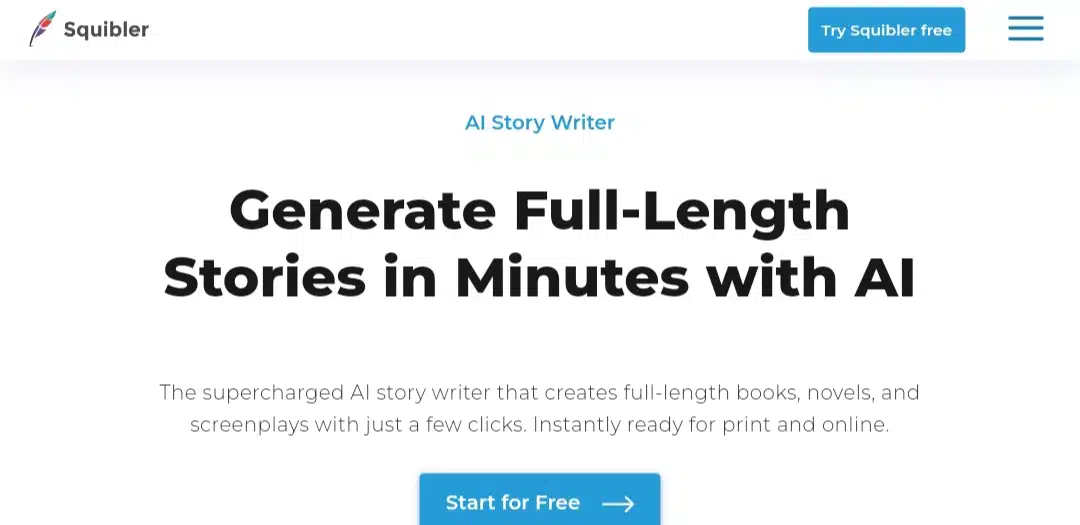
Squibler is a supercharged AI story writer who creates books and scripts for print and online use.
| Feature | Description |
| Full-Length Generation | Squibler’s AI can generate complete books or screenplays based on an initial concept or topic, producing content in various genres within minutes. |
| Story Outline Creation | Assists in organizing ideas into detailed outlines, providing a structured roadmap for your writing project. |
| AI Smart Writer | Offers content generation, editing, and enhancement, including rewriting sections, generating new scenes, and adding descriptions to enrich your story. |
| Elements Creation | Facilitates the development of complex characters, vivid settings, and intricate objects, integrating them seamlessly into your narrative. |
| Visuals Generation | Transforms text into engaging images or short videos, enhancing the visual appeal of your book or screenplay. |
| Project Management | Provides tools to track progress, set word count targets, manage priorities, and collaborate with others, ensuring timely completion of your writing projects. |
| Templates | Offers a diverse collection of templates tailored to various genres, guiding structuring different parts of your story. |
| Printing Services | Assists in printing hard copies of your finalized work, streamlining the transition from digital creation to physical publication. |
Pros
- User-friendly interface caters to both novice and experienced writers.
- Genre Versatility.
- Collaboration Features.
- Integration Capabilities.
Cons
- Squibler has slow processing speed, pricey subscriptions, and limited formats.
Pricing
- Squibler offers a free plan with limited features and a Pro plan priced at $16 per month, providing unlimited access to all features.
Best For
- This AI is the best for fiction, scriptwriters, and journal writers.
Sudowrite
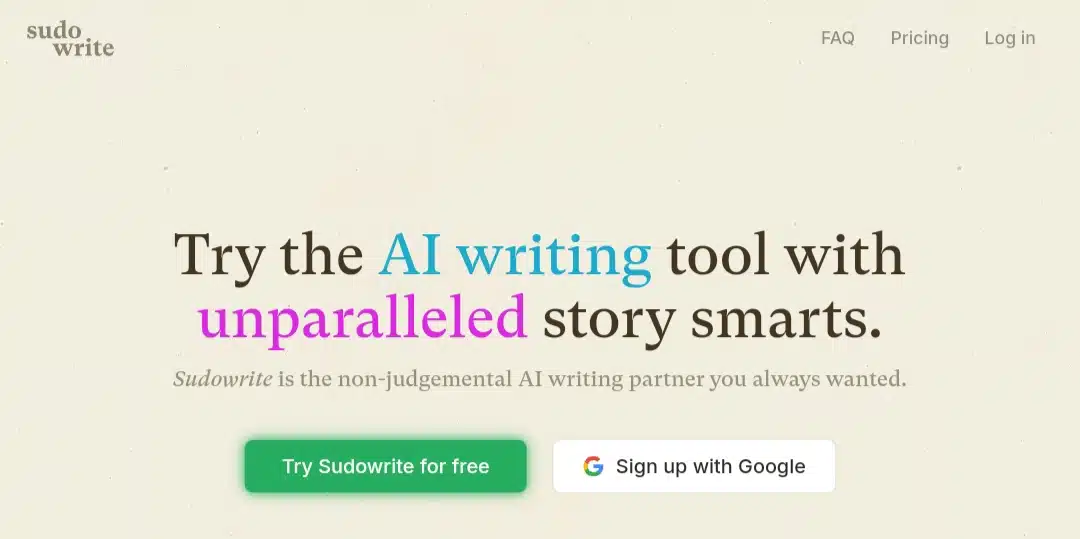
Sudowrite has earned a reputation as a “creative companion” to authors. It excels at understanding your writing style and generating content that matches your tone and voice.
| Features | Description |
| Story Engine | Help you plan, draft, and develop stories with an AI-assisted outline and chapter-by-chapter guidance |
| Description | Enhances sensory details in your writing by providing vivid descriptions based on a given scene or object. |
| Rephrases | Offers alternative ways to phrase sentences or paragraphs, including adjusting tone, style, or clarity |
| Brainstorm | Generates creative ideas or plot points to overcome writer’s block or add depth to your story. |
| Character Generator | Creates detailed character profiles, including personality traits, backstories, and motivations. |
| Plot Generator | Provides suggestions for intriguing plot developments or twists tailored to your story’s theme. |
| Tone Changer | Adjusts the tone of your writing, such as making it more formal, casual, humorous, or dramatic |
| Scene Builder | Assists in creating immersive settings with detailed descriptions and cultural elements for fictional worlds. |
| Poetry Assistance | Helps craft poetry with AI-suggested rhymes, meter adjustments, and thematic inspiration. |
| Dialogue Assistance | Helps craft realistic and engaging dialogue by suggesting improvements or creating new dialogue lines |
| Expander | Develops ideas further by adding detail or extending incomplete sentences or paragraphs. |
| Summarizer | Condenses large sections of text into concise summaries to improve clarity and focus. |
Pros
- It rephrases or rewrites work uniquely on each try.
- Delivers high-quality output.
- Eradicates writer’s block with its brainstorming and outlining offers.
Cons
- Dependency On Tropes
- Expensive plans
- Loses human touch and authenticity
Pricing
- Sudowrite has a free trial but charges 10/month for the Hobby & Student plan, $10/month for Professional, and $44 for Max.
Best For
- Fiction writers.
Novelistai.com
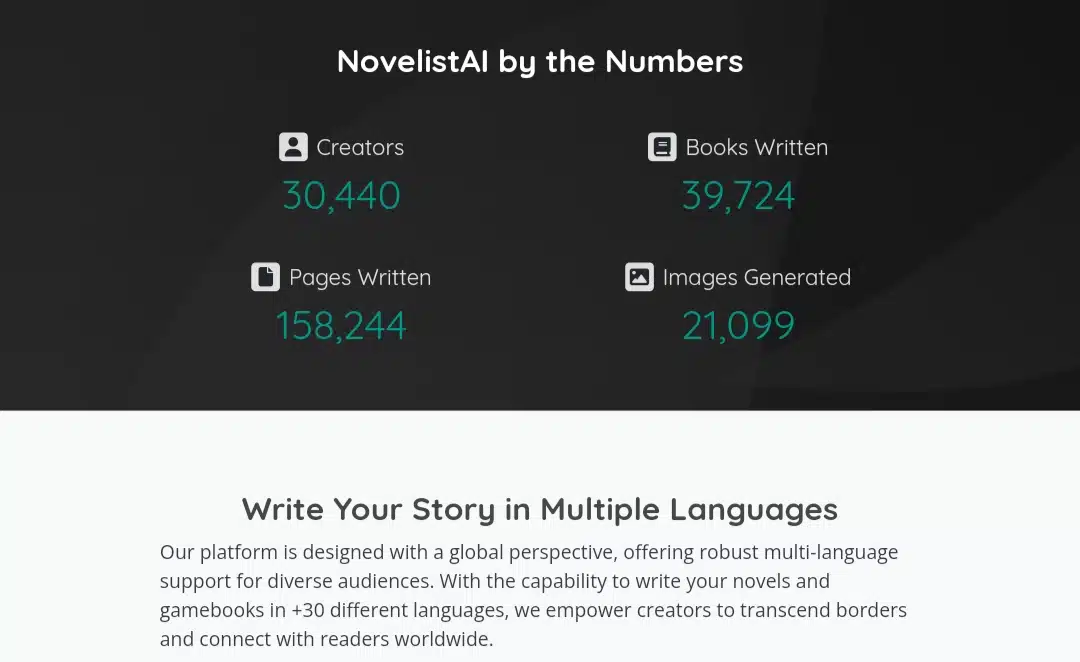
Novelista.com is another AI tool worth exploring for fiction writing. Here’s a breakdown of its features.
| Features | Description |
| Storyboarding | Assists with creating structured outlines, character arcs, and complete drafts for novels using AI. |
| Multilingual support | Can write stories in several languages aside from English. |
| Image generation | Can generate images for your books that require it. |
| Text-audiobook | Convert textual material to audiobooks. |
| Character development | Creates character profiles based on your prompt or storyboard. |
| Scene builder | Guides you through scene creation to ensure cohesive storytelling |
Pros
- Multi-language support.
- Scene-by-scene guidance ensures consistency in storytelling.
Cons
- It owns limited export and formatting options.
Pricing
- Novelistai is free but charges $12 for premium and $48 for PRO.
Best For
- Fiction writers.
Atticus
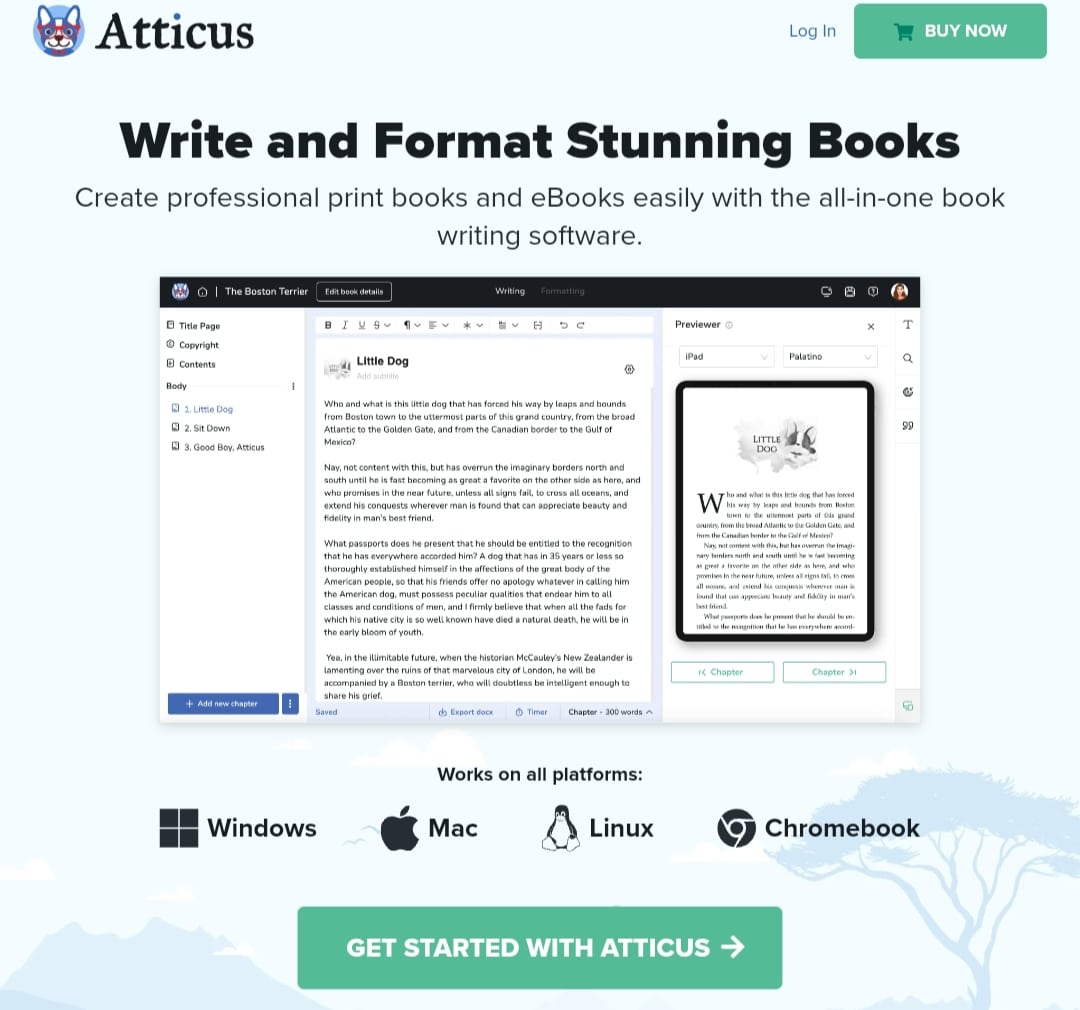
While Atticus can be a valuable tool for fiction writers, it may not be as specialized in novel writing compared to Squibler or Sudowrite.
| Features | Description |
| Template | Offers a library of writing templates. |
| Book formatting | Can format book for both print and digital platforms. |
| Collaboration | Allows you to work together on projects seamlessly. |
| File storage | Allows for file importing and exporting. |
| User-friendly interface | Includes a clean writing interface with editing tools for authors. |
Pros
- Professional-quality book formatting for multiple publishing platforms.
- User-friendly interface for writing and editing.
- The collaboration feature is useful for co-authors.
Cons
- Limited in advanced AI features like brainstorming or rewriting.
- Has no character-developing capability.
Pricing
- Atticus offers no free trial but a one-time fee of $147.
Best For
- Fiction writers.
Best AI for Writing a Nonfiction Book
- Buffer’s AI Assistant
- Writesonic
- SeoWind
- ChatGPT
Buffer’s AI assistant
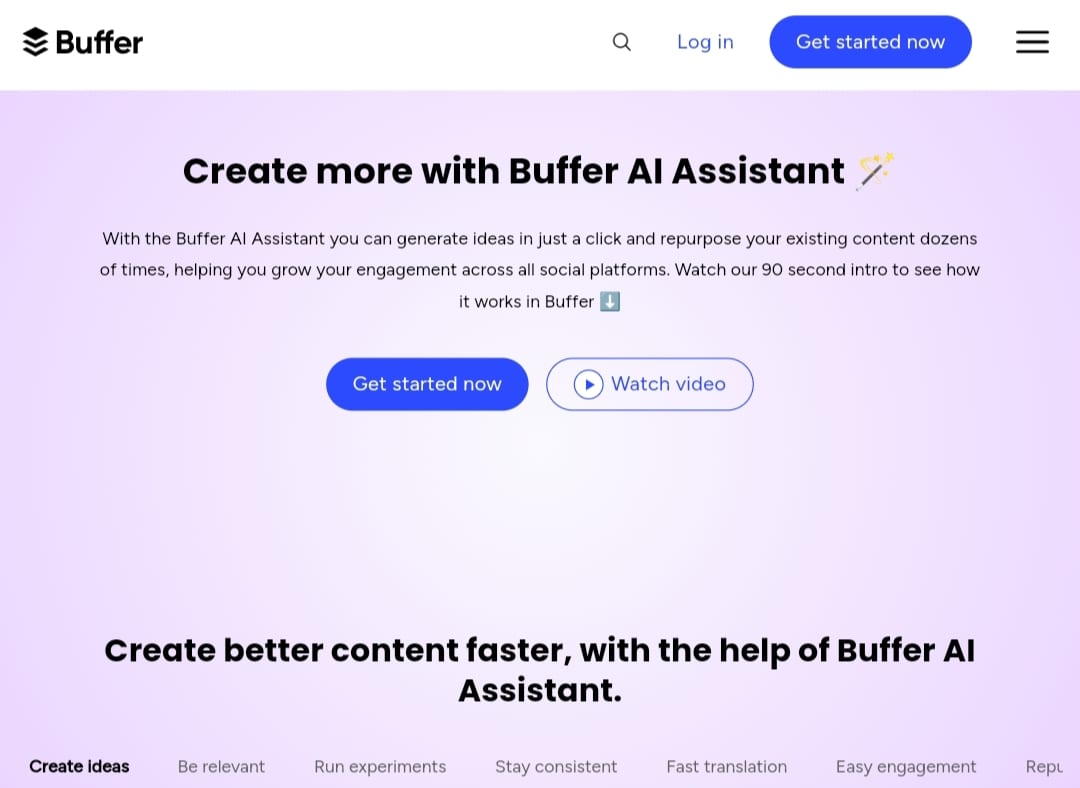
Buffer’s AI Assistant assists in generating engaging social media posts. It develops ideas, writes headlines, and repurposes your content for different platforms.
| Features | Description |
| Social media management | Generates social media posts tailored to specific platforms and audiences. |
| Post-scheduling and publishing | Automates post-scheduling for optimal audience engagement. |
| Performance insights | Offers insights into content performance and engagement metrics |
Pros
- Excellent for automating social media content creation and scheduling.
- Provides performance analytics to improve engagement.
- Saves time for social media managers.
Cons
- Not suitable for long-form content or creative writing.
- Performance insights are basic compared to dedicated analytics tools.
Pricing
- Buffer is free but charges a monthly fee of $5 for essentials and $10 for Team.
Best For
- Social media managers or marketers.
Writesonic

Writesonic is a niche AI tool for content, marketing, and growth. It writes articles, repurposes content, generates images, collaborates, edits, corroborates workflow, analyzes data, and integrates external models and tools.
| Features | Description |
| AI copywriting | Generates marketing copy, social media posts, ad texts, and more. |
| SEO optimization | Produces SEO-friendly content to improve online visibility. |
| Long-Form Content Creation | Creates blog posts, articles, and other longer pieces based on prompts |
Pros
- Ideal for creating marketing copy and SEO-friendly content.
- Supports both short and long-form content creation.
- Offers a wide range of pre-built templates for specific tasks.
Cons
- Quality of output may require human editing.
- Focused more on marketing than creative writing or novels.
Pricing
- The individual plan is $16/month, and the standard plan is $79.
Best For
- Content Writers and Marketers.
SEOWind
SeoWind creates content briefs and AI articles, conducts keyword research, and updates articles on the go.
| Features | Description |
| Keyword Analysis | Recommends keywords and phrases to target for improved rankings. |
| Competitor Analysis | Analyzes competitors’ content for strategic planning. |
| Content Brief Creation | Automatically generates detailed SEO-focused content briefs. |
Pros
- Excellent for creating detailed SEO-focused content briefs.
- Automates keyword and competitor analysis.
- Speeds up the process of planning SEO strategies.
Cons
- Limited to SEO and marketing-focused tasks.
- Requires a basic understanding of SEO to maximize its potential
Pricing
- Subscription is available monthly for $49/Basic, $59/PRO, and $299/Agency.
Best For
- Data Researchers, SEO Specialists, Content Writers, & Content Editors.
ChatGPT
ChatGPT is a versatile AI language model for various aspects of non-fiction book writing.
| Features | Description |
| Writing Assistance | Provides ideas, drafts, edits, and rewrites for content. |
| Research and Summarization | Helps summarize complex information and conduct initial research for projects. |
| Conversational Support | Simulates conversational brainstorming and answers queries. |
Pros
- Extremely versatile.
- Offers conversational support for brainstorming and research.
- Affordable and easy to use for beginners and professionals.
Cons
- It can sometimes generate generic or repetitive content.
- Requires user input to guide responses effectively.
Pricing
- ChatGPT offers a free tier with limited features and paid plans of Plus/$20, Team/$30, and PRO/$200 for increased functionality.
Best For
- Nonfiction writers and researchers.
Free AI Programs for Writing a Book
- yWriter
- Bibisco
Best For
- Creative writers.
yWriter
yWriter, a free book writing app that helps writers organize and structure books, is available in Android, Windows, iOS, and MacOS.
| Features | Description |
| Chapter and Scene Organization | Helps writers break down their stories into manageable chapters and scenes. |
| Character and Plot Tracking | Keeps track of character details, plot points, and timeline consistency. |
| Progress tracking | Monitors writing progress and provides word count goals. |
Pros
- Designed specifically for novel writers, with excellent scene and chapter organization tools.
- Tracks characters, plotlines, and progress effectively.
Cons
- Outdated interface compared to modern tools.
- Lacks integrated AI support for idea generation or rewriting.
Pricing
Best For
- Creative Writers.
Bibisco
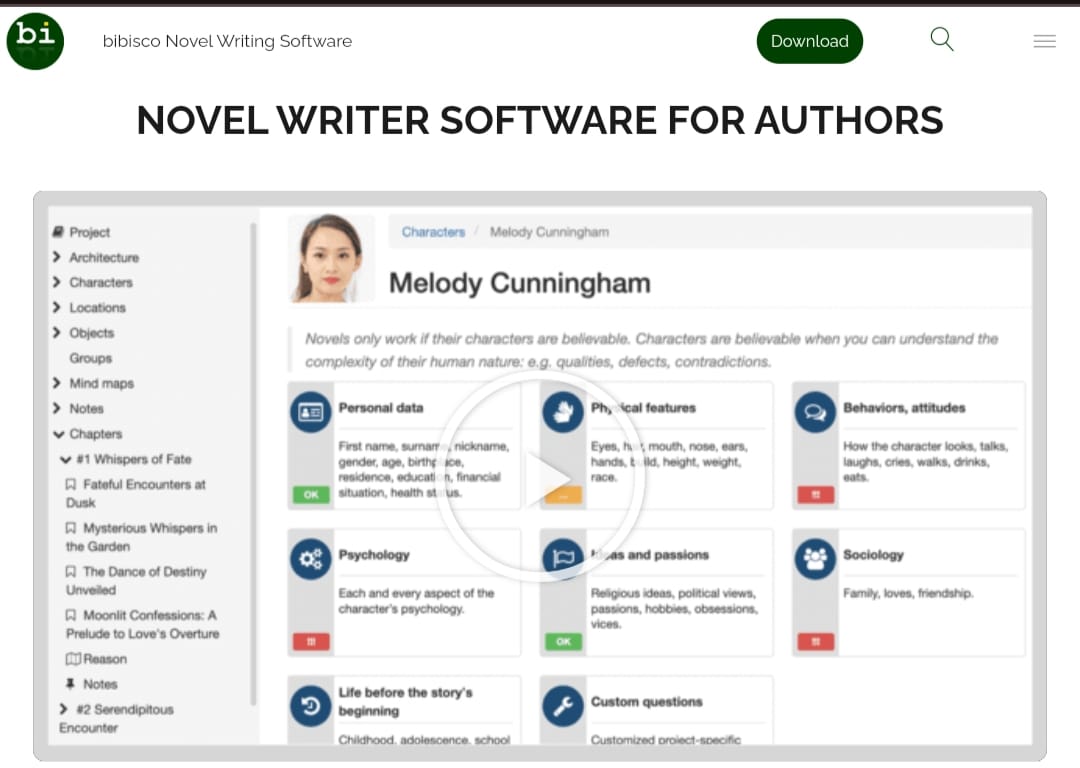
Also free and an app, Bibisco is available in multi-platform and supports 15 languages.
| Features | Description |
| Character Development | Provides detailed tools for creating multidimensional characters. |
| Structure Guidance | Encourages writers to follow structured storytelling frameworks. |
| Analysis ToolsStory | Analyzes manuscript components like chapters, scenes, and narrative balance. |
Pros
- Focuses on character-driven storytelling.
- Encourages writers to follow structured story frameworks.
- Includes analytical tools for evaluating narrative balance.
Cons
- Limited to fiction writing.
- Steeper learning curve for new users.
Pricing
Best For
- Creative writers.
How to Choose the Right AI Tool for Your Book-Writing Needs
Selecting the best AI tool depends on niche and individual requirements. However, these are the significant reasons to consider:
1. Genre: Fiction writers might prefer creative tools like Sudowrite, Squibler, Novelistai, and yWriter, designed to meet the needs of such writing. On the other hand, nonfiction authors benefit from research-focused tools like Buffer’s AI Assistant, Writesonic, SEOWind, and ChatGPT.
2. Writing Style: Choose tools that align with your voice and tone. Is it formal, informal, humorous, academic, tense, or entirely something else? Prioritize those that can generate text that aligns with your intended writing style. But remember that though AI can replicate your desired tone and voice, it’s not a replacement for your unique voice and creativity. Continuously refine it to your unique style.
3. Features: Before downloading an AI writing tool, ask yourself, “What are my biggest writing challenges?” These answers will assist you in choosing tools that offer features specifically designed to solve your needs. While at it, look for one with a user-friendly interface, as this can immensely impact your workflow.
4. Budget: Several AI writing tools offer free trials or limited free versions. Utilize these to test the tool and determine if it meets your needs and budget. If it does, evaluate the paid features offered, the quality of the output, and the overall value you’ll receive for your investment before paying.
Benefits of Using AI for Book Writing
AI tools offer numerous advantages for book writers, the most prominent including:
- Budget Management
Aspiring authors with limited funds can use AI tools for editing and formatting since they offer a cost-effective alternative, providing many of the same services at a fraction of the price. This allows them to retain a larger share of their earnings and potentially invest more in marketing and promotion upon the book’s publication.
- Saves Time
In book writing, authors usually focus on areas like outlining, plot and character development, setting structuring, grammar, etc. Doing these causes burnout and, eventually, book dumping. AI comes in to perform these tedious manual tasks, freeing up longer writing time.
- Creative Inspiration
Writer’s block will sneak up on you when you don’t need it most. It happens to the best of writers. But you can overcome this when you use AI-powered prompts and suggestions to carve great ideas that reignite your creative process.
- Quality output
Beyond basic grammar checks, AI tools analyze writing style, suggest improvements to sentence structure, and even identify areas of ambiguity or inconsistency in tone. This helps authors refine their work to a professional level, ensuring quality work.
- Efficient Multitasking
Nonfiction writers typically handle multiple writing projects with short delivery dates, which can be overwhelming. AI writing tools help organize research materials, schedule writing sessions, and generate outlines for different projects. This enables writers to deliver quality work for each client and juggle multiple deadlines more effectively.
Challenges and Ethical Considerations in AI for Writing Books
While AI offers excellent assistance in your book writing affairs, it also poses specific challenges that not only face criticism from industry thought leaders but raise skepticism in the minds of book lovers. The core of them are:
- Originality
- Plagiarism and Copyright Issues
- Originality
It’s a known fact that creativity thrives in daily and intentional practice, and doing away with it for an extensive duration due to the task-unburdening AI brings results in creative loss. Therefore, being overly dependent on AI can dilute your unique voice. As a book writer, develop a distinct voice that readers can easily identify.
- Plagiarism and Copyright Issues
As an artificial innovation, AI makes many mistakes unintentionally. While delegating your writing tasks to AI, it might plagiarize an existing work and pass it off as a new idea. In the face of such an event, publishing such work would get you sued and your entire book banned. Hence, thoroughly check AI’s contribution for infringement on existing works for earlier curtailing.
Balancing AI assistance with personal creativity and ethical transparency is key to overcoming these challenges and maximizing its benefits.
Frequently Asked Questions (FAQs)
1. What are the best AI tools for writing a book?
- Squibler, Sudowrite, and Novelistai are top picks for fiction. If you’re writing non-fiction, consider Writesonic, ChatGPT, Buffer’s AI Assistant, or SeoWind.
2. Are there free AI tools for writing a book?
- Yes. You can explore Squibler’s free plan and use yWriter, the free version of Grammarly, or Bibisco for free.
3. What are the best AI apps for writing a book on mobile devices?
- yWrite and Bibisco are the best AI apps for this cause.
4. How can AI software help with book editing and formatting?
- Editing: Tools like ChatGPT can identify and correct grammatical, typos, and punctuation mistakes, ensuring your writing is polished and professional.
- Formatting: Atticus can help with formatting tasks such as creating headings, adjusting spacing, and even generating different file formats (e.g., ePub, Kindle).
5. Can AI tools assist with generating book ideas?
- Yes. AI can provide prompts, help develop characters, and even assist with world-building.
6. Are AI tools reliable for book writing, or do they require manual input?
- Think of AI as a collaborator, not a replacement. You’ll need to guide it, refine its output, and ensure accuracy, especially with non-fiction.
Wrapping up,
You don’t have to write alone; AI tools are valuable collaborators, offering a helping hand when you need it most. From overcoming writer’s block with Squibler and Sudowrite’s creative prompts to refining your prose with ChatGPT, these tools can streamline your workflow and bring your book to life. And— if you’re a nonfiction writer, experiment with tools like Buffer and Writesonic to discover how they can fasten your freelance writing and help you achieve your goals.
DISCLAIMER!
“This publication, review, or article (“Content”) is based on our independent evaluation and is subjective, reflecting our opinions, which may differ from others’ perspectives or experiences. We do not guarantee the accuracy or completeness of the Content and disclaim responsibility for any errors or omissions it may contain.
The information provided is not investment advice and should not be treated as such, as products or services may change after publication. By engaging with our Content, you acknowledge its subjective nature and agree not to hold us liable for any losses or damages arising from your reliance on the information provided.
Always conduct your own research and consult professionals where necessary.”


