


If you’ve been thinking about switching to solar energy or upgrading your current system, you’re on the right track.
In Nigeria, where power outages are frequent, and electricity costs keep rising, having a reliable solar battery is a game-changer. Solar batteries store the energy your solar panels generate during the day so you can use it when the sun isn’t shining. But with so many options on the market, how do you choose the right one? This article includes everything you need to know about buying solar batteries in Nigeria and highlights the five best solar batteries available in 2025.
By the end, you’ll clearly understand what to look for, why the right battery matters, and which brands stand out.
But before we go all in, let’s make a quick swerve.
The 5 best solar batteries in Nigeria in 2025
Now that you understand what to look for and why it matters, let’s explore the top five solar batteries available in Nigeria today. These options have been carefully selected based on performance, durability, customer feedback, and availability.
- BYD Solar Battery — Focus Model: BYD Battery-Box Premium HVM 10.2 kWh
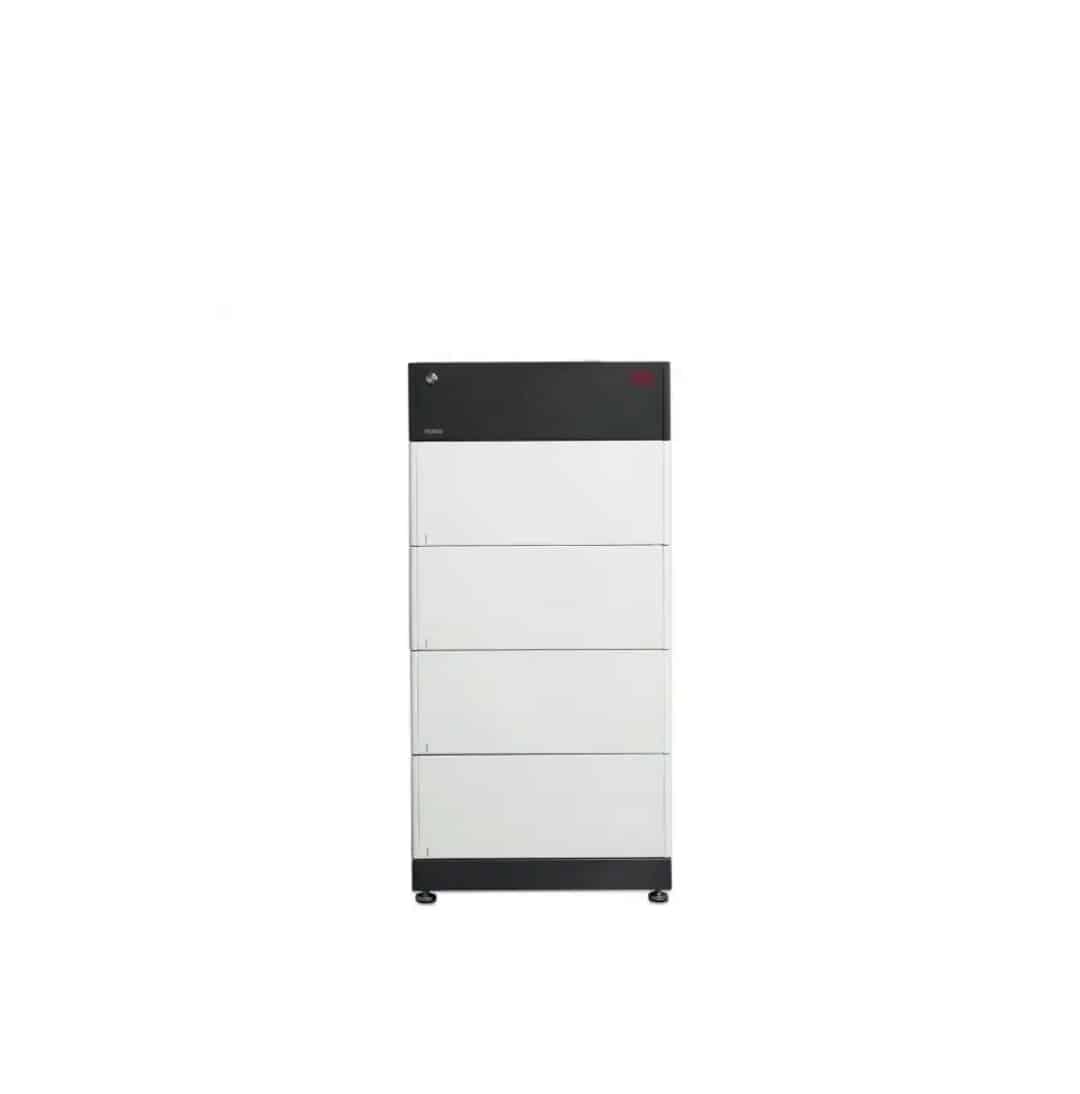
Specifications
| Feature | Specification |
| Model | Battery-Box Premium HVM 10.2 kWh |
| Battery Modules (in series) | 4 x HVM Modules |
| Usable Energy | 10.24 kWh |
| Nominal Voltage | 204 V |
| Operating Voltage Range | 160 V – 230 V |
| Capacity (Ah) | 50.2 Ah |
| Internal Resistance | Not specified (modules: ~38 mΩ each) |
| Capacity Affected by Temperature | Minimal (derating < +5°C) |
| Depth of Discharge (DoD) | 100% (Tested at 100% DoD, recommended 90-95%) |
| Round-trip Efficiency | ≥96% |
| Battery Life and Warranty | 6,000+ cycles / 10 years |
| Charging Voltage | Up to 230 V (system voltage) |
| Self-Discharge Rate | Very low (<3% per month) |
| Maximum Discharge Current | 50 A |
| Peak Output Current | 75 A (for 5 seconds) |
| Recommended Max Charging Current | 50 A |
| End of Discharge Voltage | 160 V |
| Weight | 167 kg (total for 4 modules + BCU) |
| Size and Dimensions (H/W/D) | 1178 x 585 x 298 mm |
| Appearance | Modular, upright, rack-mounted |
| Battery Cell Technology | Lithium Iron Phosphate (LFP, cobalt-free) |
| Operating Temperature | -10°C to +50°C |
| Enclosure Protection Rating | IP55 |
| Communication | CAN / RS485 |
| Certification | VDE2510-50, IEC62619, CEC, CE, UN38.3 |
| Applications | On-grid, On-grid + Backup, Off-grid |
| Short Circuit Current | 2300A |
| Rated Power | 10.2 kW |
Why buy BYD Battery-Box Premium HVM?
This modular lithium iron phosphate battery is designed for scalable residential and commercial solar systems. It offers high capacity, excellent safety features, and a long lifespan, making it ideal for a future-proof system. Its compact design allows easy installation, and its high efficiency ensures minimal energy loss.
Where to buy?
Authorized BYD dealers in Lagos, Abuja, Port Harcourt, and online platforms like Jiji.ng and PriceNow.ng stock this model.
Price
The BYD Battery-Box Premium HVM 10.2 kWh retails for approximately ₦3,500,000 to ₦4,200,000, depending on the seller and location.
Checklist to mark through before buying
- Verify compatibility with your inverter and solar panels.
- Confirm warranty and after-sales service.
- Ensure proper installation by certified technicians.
Real-life application scenario
A four-bedroom home in Lagos with a solar array of 6kW can use this battery to power:
- LED lighting throughout the house.
- Multiple ceiling fans.
- A 250L refrigerator.
- TV and entertainment systems.
- Laptop and phone charging.
- Small water pumps.
This setup provides reliable power backup for 8-10 hours during outages.
Felicity Lithium Solar Battery — Focus Model: Felicity 48V 200Ah LiFePO4
The Felicity 48V 200Ah LiFePO4 battery (model FLA48200) is a premium lithium iron phosphate solar battery designed for Nigerian homes and small businesses. Delivering 10kWh of usable energy, it perfectly balances high capacity, safety, and durability. Its advanced Battery Management System (BMS) protects against overcharge, over-discharge, short circuits, and overheating, ensuring long-lasting performance.
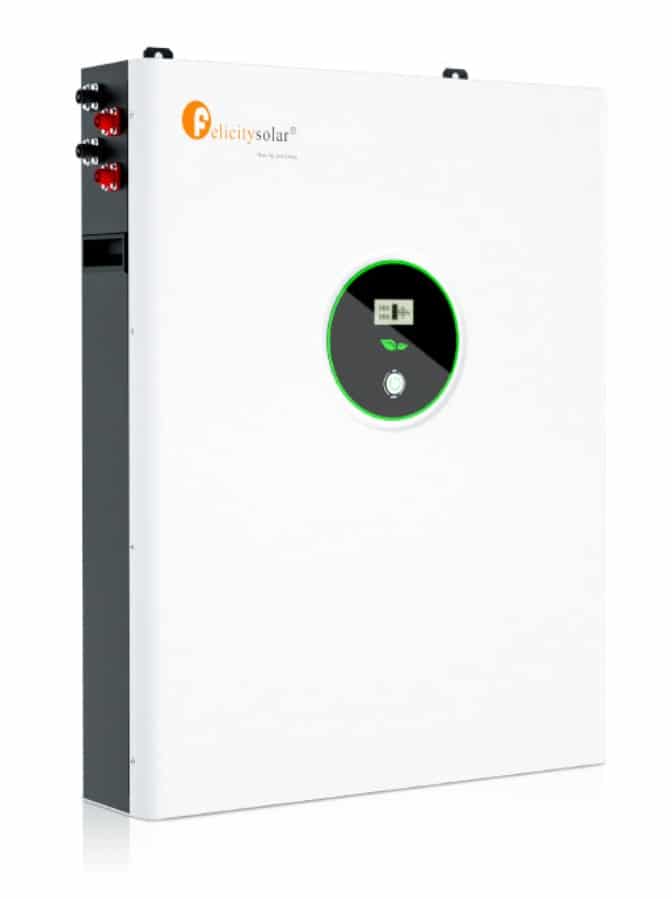
Specifications summary
| Feature | Specification |
| Model | FLA48200 |
| Battery Type | Lithium Iron Phosphate (LiFePO4) |
| Usable Energy Capacity | 10 kWh |
| Nominal Voltage | 51.2 V |
| Operating Voltage Range | 44.8 V – 57.6 V |
| Capacity (Ah) | 200 Ah |
| Depth of Discharge (DoD) | ≥ 95% |
| Cycle Life | ≥ 6,000 cycles (at 80% DoD) |
| Round-trip Efficiency | ~95% |
| Max Charge/Discharge Current | 120 A (continuous) / 150 A (peak, 15 seconds) |
| Recommended Charge/Discharge Power | ≤ 6,000 W |
| Communication Interfaces | RS485, CAN |
| Ingress Protection Rating | IP21 |
| Battery Management System (BMS) | Built-in, smart BMS with multiple safety protections |
| Operating Temperature Range | Charging: 0°C to 55°C / Discharging: -20°C to 55°C |
| Installation | Wall-mounted or floor-mounted |
| Weight | 68 kg |
| Dimensions (L x W x H) | 735 mm x 433 mm x 188 mm |
| Warranty | 7 years |
| Scalability | Supports up to 15 units in parallel (up to 150 kWh) |
Why buy Felicity 48V 200Ah LiFePO4?
- A long lifespan with over 6,000 cycles ensures years of reliable power.
- A high depth of discharge (95%) means more usable energy.
- Advanced safety features protect your home and investment.
- The compact and lightweight design fits most Nigerian homes easily.
- Supports parallel expansion for future energy needs.
- Suitable for Nigeria’s tropical climate with a wide operating temperature range.
- It is backed by a 7-year warranty and local support.
Where to buy?
You can purchase the Felicity 48V 200Ah LiFePO4 battery from reputable online and physical retailers in Nigeria:
Jumia Nigeria: ₦2,080,000 to ₦2,500,000
Jiji Nigeria: Prices range around ₦2,000,000 to ₦2,300,000 (varies by seller)
Nature Solar Nigeria Ltd (Alaba Market, Lagos): Approx. ₦2,100,000 with official warranty and support
Always buy from authorized dealers or verified sellers to ensure authenticity and warranty coverage.
Checklist before buying Felicity 48V 200Ah LiFePO4
- Confirm the battery model and chemistry (LiFePO4) with the seller.
- Check warranty terms and after-sales support availability.
- Verify compatibility with your inverter and solar panel system.
- Ask about installation services and maintenance guidelines.
- Compare prices from multiple sources to get the best deal.
Real-life application scenario
Suppose you live in a three-bedroom house in Abuja with a solar system of 6 solar panels rated at 300W each (total 1.8 kW). The Felicity 48V 200Ah battery provides about 10kWh of usable energy, enough to power:
- LED lighting throughout the house (living room, bedrooms, kitchen).
- A 200L refrigerator running continuously.
- Ceiling fans in each room.
- A 32-inch LED TV and sound system.
- Laptop and phone chargers.
- Small appliances like a blender or water pump.
This setup ensures you have power for essential appliances during the night or extended grid outages, typically lasting 8 to 10 hours, depending on usage.
- Blue Carbon Lithium Solar Battery — Focus Model: Blue Carbon 48V 150Ah LiFePO4
The Blue Carbon 48V 150Ah LiFePO4 battery is a high-quality lithium iron phosphate battery for residential and commercial solar energy storage. With a usable energy capacity of approximately 7.68 kWh, it offers a reliable, long-lasting power solution tailored to Nigeria’s energy needs. Built with a robust cast aluminum-magnesium alloy casing, this battery is corrosion-resistant and durable, making it ideal for tropical climates.
It features a smart Battery Management System (BMS) that ensures safety by protecting against overcharge, over-discharge, short circuit, and overheating.
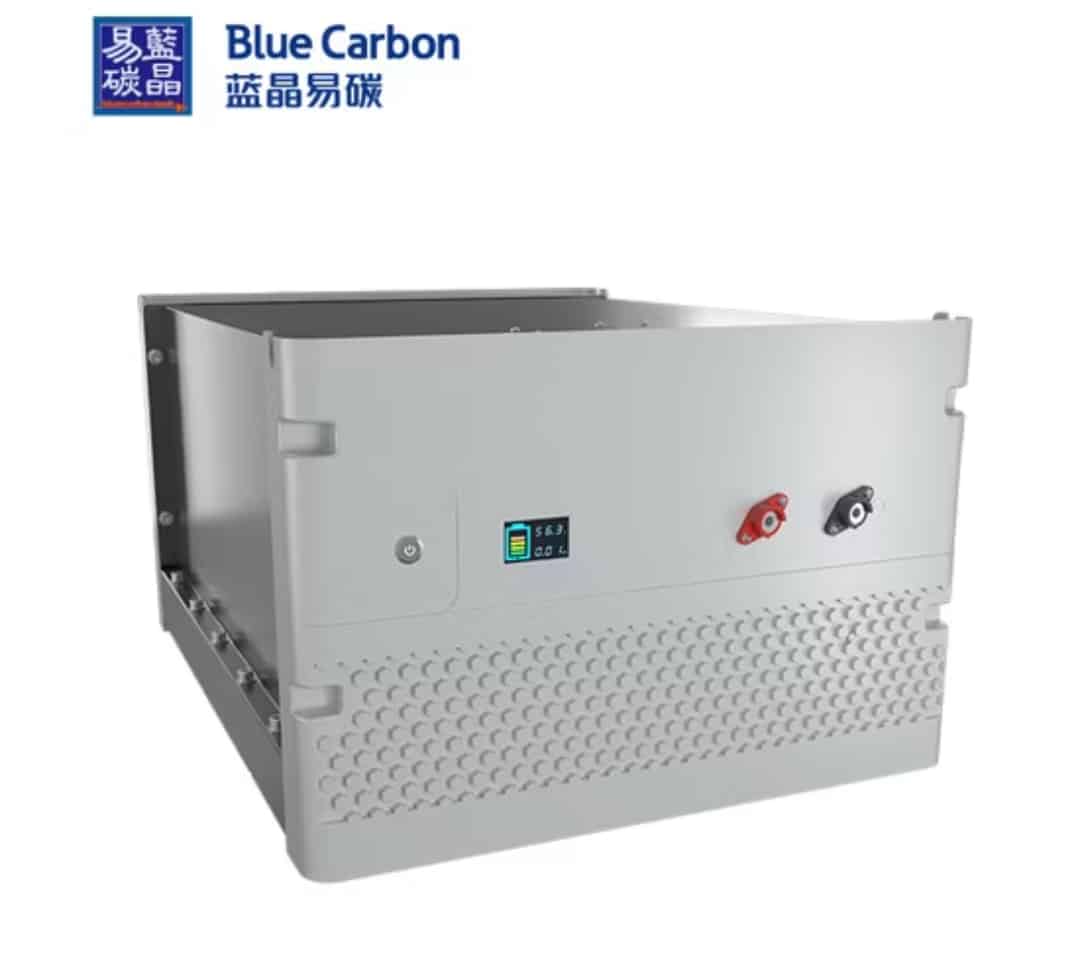
Specifications table
| Feature | Specification |
| Model | Blue Carbon 48V 150Ah LiFePO4 |
| Battery Type | Lithium Iron Phosphate (LiFePO4) |
| Usable Energy Capacity | 7.68 kWh |
| Nominal Voltage | 51.2 V |
| Operating Voltage Range | 44.8 V – 58.4 V |
| Capacity (Ah) | 150 Ah |
| Depth of Discharge (DoD) | > 80% |
| Cycle Life | > 5,000 cycles (at <0.5C discharge rate) |
| Round-trip Efficiency | ~94% |
| Maximum Charge Voltage | 58.4 V – 60 V |
| Maximum Charge Current | 75 A |
| Maximum Continuous Discharge Current | 80 A |
| Peak Discharge Current | 150 A (short bursts) |
| Discharge Cut-off Voltage | 37.5 V |
| Operating Temperature Range | Charge: 0°C to 45°C / Discharge: -20°C to 60°C |
| Storage Temperature Range | -20°C to 25°C (less than 12 months) |
| Weight | Approximately 60.25 kg |
| Dimensions (L x W x H) | 650 mm x 520 mm x 180 mm |
| Enclosure Protection Rating | IP65 (dust and water resistant) |
| Housing Material | ABS/PVC (customizable) |
| Battery Management System (BMS) | Integrated with protections for safety |
| Warranty | 5 years |
| Scalability | Supports parallel connection for expanded capacity |
Why buy Blue Carbon 48V 150Ah LiFePO4?
- Durable, corrosion-resistant aluminum-magnesium alloy casing ideal for tropical climates.
- A long cycle life of over 5,000 cycles ensures years of dependable use.
- High safety standards with smart BMS protecting against common battery fault’s.
- IP65 rating provides dust and water resistance, suitable for varied installation environments.
- Efficient energy storage with high round-trip efficiency (~94%).
- Flexible installation and scalability to grow with your energy demands.
- Backed by a 5-year warranty and responsive customer support.
Where to buy?
Zeus Electrical Limited (ZEL.ng): Blue Carbon 5kWh 48V Lithium Ion Battery available in stock, pricing around ₦1,800,000 to ₦2,200,000.
Jiji Nigeria: Various sellers offer Blue Carbon batteries in the ₦1,700,000 to ₦2,100,000 range.
Local solar equipment distributors in Lagos and Port Harcourt also stock Blue Carbon batteries, which come with warranties and installation support.
Checklist to tick off before buying Blue Carbon 48V 150Ah LiFePO4
- Confirm the exact model and specifications with the seller.
- Verify warranty coverage and after-sales service availability.
- Ensure compatibility with your inverter and solar system voltage.
- Ask about installation services and maintenance recommendations.
- Compare prices from multiple reputable vendors to get the best deal.
Real-life application scene
Consider a two-bedroom apartment in Lagos with 4 solar panels rated at 300W each (1.2 kW total). The Blue Carbon 48V 150Ah battery provides about 7.68 kWh of usable energy, enough to power:
- LED lighting throughout the apartment.
- A 150L refrigerator running continuously.
- Ceiling fans in living and bedrooms.
- Phone and laptop charging stations.
- A small TV and entertainment system.
This setup offers reliable power backup for 6 to 8 hours during grid outages or at night, ensuring comfort and convenience without interruption.
- Yohako Lithium Solar Battery — Focus Model: Yohako 48V 300Ah LiFePO4
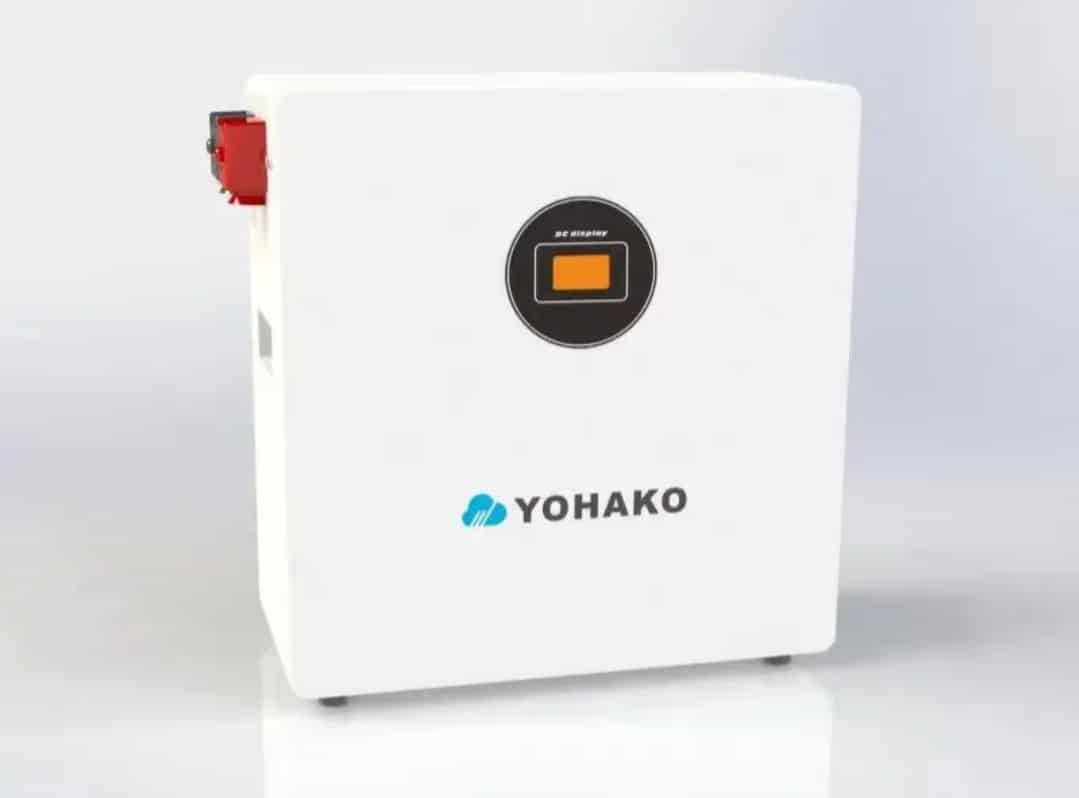
The Yohako 48V 300Ah LiFePO4 battery is a high-capacity lithium iron phosphate battery designed for medium to large residential solar systems and small commercial applications. With a nominal voltage of 48V and a capacity of 300Ah, it delivers approximately 14.4 kWh of usable energy. This makes it ideal for powering multiple household appliances and providing extended backup during frequent power outages common in Nigeria.
Specifications
| Feature | Specification |
| Model | Yohako 48V 300Ah LiFePO4 |
| Battery Type | Lithium Iron Phosphate (LiFePO4) |
| Usable Energy Capacity | 14.4 kWh |
| Nominal Voltage | 48 V |
| Operating Voltage Range | 37.5 V – 54.75 V |
| Capacity (Ah) | 300 Ah |
| Depth of Discharge (DoD) | 80% – 95% |
| Cycle Life | > 6000 cycles (at 80% DoD) |
| Round-trip Efficiency | ~95% |
| Maximum Continuous Discharge Current | 100 A (150 A and 200 A optional) |
| Maximum Charge Current | 50 A |
| Weight | Approx. 120 kg |
| Dimensions (L x W x H) | 1012 mm x 232 mm x 500 mm |
| Communication Interfaces | RS485, RS232, CAN |
| Operating Temperature Range | Charge: 0°C to 50°C / Discharge: -20°C to 60°C |
| Ingress Protection Rating | IP54 |
| Warranty | 5-10 years |
| Certifications | CE, MSDS, UN38.3, TUV |
| Design Life | 15 years |
Why buy Yohako 48V 300Ah LiFePO4?
- High capacity (14.4 kWh) suitable for powering large homes or small businesses.
- A long cycle life of over 6000 cycles ensures durable and cost-effective energy storage.
- Advanced BMS provides comprehensive safety protections.
- Supports multiple communication protocols for system monitoring and integration.
- The robust IP54 rating protects against dust and water ingress and suits Nigerian environments.
- It is backed by a 10-year warranty and international certifications.
- Scalable and modular design allows expansion as energy needs grow.
Where to buy Yohako 48V 300Ah LiFePO4 in Nigeria
Available through specialized solar distributors in Lagos and Abuja.
Online platforms like Jiji.ng and Jumia sometimes list Yohako batteries from verified sellers.
Local solar equipment suppliers in major Nigerian cities offer installation and warranty support.
Price
Jiji: ₦ 3,000,000
Energy mall.ng: ₦2,860,200
Checklist to tick off before buying Yohako 48V 300Ah LiFePO4
- Confirm battery specifications and warranty with the seller.
- Ensure compatibility with your inverter and solar system voltage.
- Verify after-sales service and installation support availability.
- Compare prices from multiple reputable vendors.
- Check certifications and authenticity to avoid counterfeit products.
Real-life application setup
In a four-bedroom home in Lagos with a 7.5 kW solar panel array, the Yohako 48V 300Ah battery provides approximately 14.4 kWh of usable energy, enough to power:
- LED lighting throughout the home.
- Multiple ceiling fans.
- A 300L refrigerator running continuously.
- TV and entertainment systems.
- Laptop and phone charging stations.
- Small kitchen appliances like blenders and microwaves.
This battery setup offers reliable backup power for 10 to 12 hours during grid outages or nighttime, ensuring comfort and convenience for a large household.
- SRNE Lithium Solar Battery — Focus Model: SRNE 48V 200Ah LiFePO4
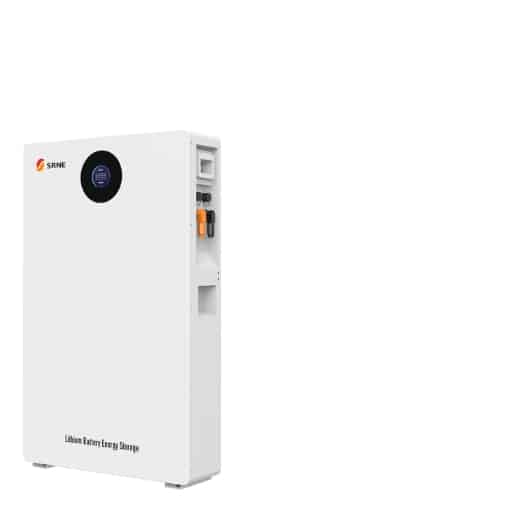
The SRNE 48V 200Ah LiFePO4 battery is a high-quality lithium iron phosphate solar battery designed for residential and commercial energy storage applications. Offering a usable energy capacity of approximately 10.24 kWh, this battery combines long cycle life, high efficiency, and advanced safety features to meet the demands of Nigerian solar users.
Specifications
| Feature | Specification |
| Model | SRNE EOS10B / ES-10.24L |
| Battery Type | Lithium Iron Phosphate (LiFePO4) |
| Usable Energy Capacity | 10.24 kWh |
| Nominal Voltage | 51.2 V |
| Operating Voltage Range | 48 V – 51.2 V |
| Capacity (Ah) | 200 Ah |
| Depth of Discharge (DoD) | 80% – 95% |
| Cycle Life | ≥ 6,000 cycles (at 80% DoD, 0.5C, 25°C) |
| Round-trip Efficiency | ~95% |
| Max Continuous Charge Current | 80 A |
| Max Continuous Discharge Current | 80 A |
| Peak Discharge Current | 100 A (short bursts) |
| Charge Cut-off Voltage | 54.0 V ± 0.5 V |
| Discharge Cut-off Voltage | 42.5 V ± 0.5 V |
| Communication Interfaces | CAN, RS485 |
| Mounting Type | Wall-mounted |
| Dimensions (W x D x H) | 610 mm x 160 mm x 800 mm |
| Weight | Approximately 72 kg |
| Ingress Protection Rating | IP21 |
| Operating Temperature Range | Charge: 0°C to 50°C / Discharge: -15°C to 55°C |
| Storage Temperature Range | -20°C to 55°C |
| Warranty | Typically 5 to 10 years (varies by seller) |
| Parallel Support | Supports up to 14 units in parallel |
Why buy SRNE 48V 200Ah LiFePO4?
- A long lifespan with over 6,000 cycles ensures durable, cost-effective energy storage.
- High round-trip efficiency (~95%) maximizes usable energy and reduces losses.
- Advanced Battery Management System (BMS) provides protection against overcharge, over-discharge, short circuit, and temperature extremes.
- Compatible with a wide range of popular solar inverters used in Nigeria.
- The wall-mounted design saves space and is easy to install.
- Supports communication protocols (CAN, RS485) for real-time monitoring and system integration.
- Suitable for Nigeria’s tropical climate with a broad operating temperature range.
Where to buy?
Colcal Machinery (Kenya-based but ships to Nigeria): It is available via its online store, which offers shipping options.
Thrillhouse Nigeria Limited: Stocks SRNE batteries with local warranty and support.
Solar Market Uganda (regional supplier): Offers SRNE EOS10B batteries with delivery options to Nigeria.
Jiji Nigeria and other local solar equipment dealers: Various sellers list SRNE batteries. Prices typically range from ₦1,200,000 to ₦1,500,000, depending on the seller and the location.
Checklist before buying SRNE 48V 200Ah LiFePO4
- Verify the battery model and specifications with the seller.
- Confirm warranty terms and local after-sales support availability.
- Ensure compatibility with your inverter and solar system voltage.
- Ask about installation services and maintenance recommendations.
- Compare prices from multiple reputable vendors to secure the best deal.
Real-life usage scenario
A modern two-bedroom home in Port Harcourt with a solar array of 5 panels rated at 320W each (total 1.6 kW). The SRNE 48V 200Ah battery provides about 10.24 kWh of usable energy, sufficient to power:
- LED lighting throughout the home.
- A 200L refrigerator running continuously.
- Ceiling fans in bedrooms and living areas.
- Phone and laptop charging stations.
- A 32-inch LED TV and sound system.
This setup ensures reliable power backup for 8 to 10 hours during grid outages or nighttime, keeping your household comfortable and connected.
Comparative summary of the 5 best solar batteries in Nigeria
| Specification | BYD Battery-Box Premium HVM 10.2 kWh | Felicity 48V 200Ah LiFePO4 | Blue Carbon 48V 150Ah LiFePO4 | Yohako 48V 300Ah LiFePO4 | SRNE 48V 200Ah LiFePO4 |
| Nominal Voltage (V) | 48 | 51.2 | 51.2 | 48 | 51.2 |
| Capacity (Ah) | 213 | 200 | 150 | 300 | 200 |
| Energy Capacity (kWh) | 10.2 | 10 | 7.68 | 14.4 | 10.24 |
| Depth of Discharge (DoD) | 90% | ≥95% | >80% | 80% – 95% | 80% – 95% |
| Cycle Life (Cycles) | 6000 | ≥6000 | >5000 | >6000 | ≥6000 |
| Round-trip Efficiency | ≥96% | ~95% | ~94% | ~95% | ~95% |
| Weight (kg) | ~167 | 68 | 60.25 | ~120 | 72 |
| Warranty | 10 years | 7 years | 5 years | 5-10 years | 5 – 10 years |
| Price Range (₦) | ₦3,500,000 – ₦4,200,000 | ₦2,000,000 – ₦2,500,000 | ₦1,700,000 – ₦2,200,000 | ₦2,800,000 – ₦3,500,000 | ₦1,350,000 – ₦2,500,000 |
| Key Features | Modular, scalable, high efficiency | Advanced BMS, compact, scalable | Corrosion-resistant, IP65 rated | High capacity, IP54 rated | Compact, wall-mounted, CAN/RS485 |
Factors to consider when buying solar batteries in Nigeria
Choosing a solar battery isn’t just about going for the cheapest or most popular brand. It’s about finding the right match for your energy needs, your budget, and the environment where you live. When you invest in a solar battery, you want it to last long, perform well, and integrate smoothly with your solar system. Here are the key factors you should carefully consider before making your purchase:
Capacity (Ah)
Capacity, measured in ampere-hours (Ah), tells you how much energy a battery can store. Think of it as the size of your battery’s fuel tank. The higher the capacity, the longer your battery can power your appliances without needing a recharge. For example, a 200Ah battery stores twice as much energy as a 100Ah battery. When choosing capacity, consider your daily energy consumption. If you run several appliances or want a backup for longer hours, a higher-capacity battery is essential. But remember, bigger capacity usually means a higher price and more weight.
Voltage compatibility
Solar batteries commonly come in 12V, 24V, or 48V configurations. Your battery’s voltage should align with your solar inverter and panel setup. Using mismatched voltages can cause inefficiencies or even damage your system. For most household solar systems in Nigeria, 48V batteries are popular because they offer better efficiency and lower current losses over longer cable runs. If you’re unsure, consult with your solar installer to ensure compatibility.
Battery type
The type of battery you choose plays a crucial role in how well your solar system performs and how long it lasts. In Nigeria, the two main types are lead-acid and lithium-ion batteries.
Lead-acid batteries have been around for decades and are generally cheaper upfront. They come in variants like flooded tubular, sealed, and gel batteries. While they offer decent performance, they are bulky and heavier and require regular maintenance, such as topping up with distilled water and cleaning terminals. Their cycle life is shorter, and they typically allow only about 50% depth of discharge (DoD), meaning you can only use half of their capacity without damaging them.
Lithium-ion batteries, especially lithium iron phosphate (LiFePO₄) types, are becoming the preferred choice in Nigeria despite their higher initial cost. They are lighter, more compact, and require minimal maintenance. Lithium batteries can safely discharge up to 80-90% of their capacity, giving you more usable energy.
They also have a longer cycle life (often 3,000 to 7,000 cycles), meaning they last significantly longer than lead-acid batteries. Moreover, lithium batteries handle Nigeria’s hot climate better, maintaining performance even at higher temperatures, which is essential given the country’s tropical conditions.
Depth of Discharge (DoD)
Depth of Discharge refers to how much of the battery’s capacity you can use without causing damage. For example, a battery with an 80% DoD allows you to use 80% of its stored energy regularly. This is important because using more than the recommended DoD shortens battery life.
Lead-acid batteries typically have a DoD of around 50%, so you only get half of their rated capacity as usable energy. In contrast, lithium batteries have a DoD of 80-90%, meaning you can safely use most of their capacity. Choosing a battery with a higher DoD means you get more value and longer runtime from your investment.
Cycle life
Cycle life is the number of complete charge and discharge cycles a battery can undergo before its capacity falls below 80% of the original. This directly impacts how long your battery will last.
Lead-acid batteries usually provide 1,000 to 2,000 cycles, while lithium batteries can deliver 3,000 to 7,000 cycles or more. This means lithium batteries often last two to three times longer, making them more cost-effective over time despite the higher upfront cost.
Efficiency
Round-trip efficiency measures how much energy you get back from the battery compared to what you put in. For example, a battery with 90% efficiency returns 90 units of energy for every 100 units charged.
Lithium batteries generally have higher efficiencies (90-95%) than lead-acid batteries (around 80-85%). Higher efficiency means less energy loss during charging and discharging, which improves your overall solar system performance.
Temperature range and climate suitability
Nigeria’s climate varies from humid coastal regions in the south to hot, dry areas in the north. High temperatures and humidity can accelerate battery degradation, reduce capacity, and shorten lifespan.
Lithium iron phosphate batteries are well-suited for Nigeria’s climate because they tolerate higher temperatures (up to 60°C) without significant performance loss. Lead-acid batteries, especially flooded types, are more heat-sensitive and require proper ventilation and maintenance to avoid premature failure.
Installing batteries in shaded, well-ventilated areas and using temperature-compensated charge controllers can also help extend battery life in Nigeria’s environment.
Warranty and after-sales support
A good warranty is a sign of confidence from the manufacturer and protects you against early failures. Look for warranties covering at least 5 to 10 years or a guaranteed number of cycles.
Equally important is the availability of local support and service centers in Nigeria. Buying from authorized dealers ensures you get genuine products and access to technical assistance and spare parts when needed.
Price and value for money
Price is always a consideration, but don’t let it be the sole deciding factor. Cheaper batteries may have shorter lifespans and lower performance, leading to higher replacement and maintenance costs.
Balance your budget with quality, capacity, efficiency, and warranty. Prices in Nigeria vary depending on the brand, battery type, and seller. Always compare prices from reputable sources and factor in installation and maintenance costs to get the best value.
Benefits of choosing the right solar battery
Selecting the right solar battery directly impacts your daily life and long-term energy costs. When you choose wisely, you unlock several essential benefits that make your solar system more efficient, reliable, and cost-effective. Here they are:
Reliable power supply
One of Nigeria’s biggest frustrations is unpredictable electricity. With the right solar battery, you can say goodbye to sudden blackouts and voltage fluctuations. Your battery stores energy generated during the day and supplies it when the grid fails or the sun isn’t shining. This means your lights stay on, your fridge keeps running, and your devices remain charged no matter the time or weather.
Cost savings over time
A quality solar battery helps you make the most of your solar panels. Instead of wasting excess energy during the day, you store it for use at night or during cloudy days. This reduces your dependence on expensive grid electricity or noisy generators. Over time, the savings on your electricity bills and fuel costs add up, making your solar investment more worthwhile.
Energy independence
Owning a good solar battery gives you more control over your energy. You’re less vulnerable to power cuts, tariff hikes, or fuel shortages. This independence is especially valuable for homes and businesses in areas with unreliable grid connections. It also means you can plan your energy use better, knowing you have a steady reserve.
Environmental impact
By maximizing the use of solar energy with an efficient battery, you reduce your carbon footprint. You rely less on fossil fuels and generators that pollute the air. Choosing a long lifespan battery and recyclable materials minimizes environmental harm. Every step toward clean energy helps Nigeria move closer to sustainable development.
Lower maintenance and hassle
Some batteries require constant maintenance, like topping up water or cleaning terminals. Choosing a lithium or sealed lead-acid battery means less hassle for you. These batteries are designed to be maintenance-free or low-maintenance, freeing up your time and reducing the risk of damage due to neglect.
Flexibility and scalability
The right battery system can grow with your needs. Many lithium batteries support modular designs, allowing you to add more units as your energy demand increases. This flexibility means you won’t have to replace your entire system when your household or business expands.
Summing up,
Choosing the right solar battery can greatly affect how well your solar system works, especially in Nigeria, where power cuts are common. So, what should you look out for? Think about how much energy the battery can store, how long it can last, and the warranty it comes with.
The top brands like BYD, Felicity, Blue Carbon, Yohako, and SRNE offer great options for different budgets and needs. Investing in a good battery means you get steady power, save money, and enjoy energy independence.
Ready to take the next step? Contact trusted dealers today to find the perfect solar battery to keep your home or business powered up, rain or shine!


